
You're in the kitchen with a pot on the stove and a bowl in your hand, trying to answer a simple question that never feels simple: how many calories are in homemade vegetable soup? One bowl looks light and brothy, another looks almost creamy, and both can be called the same thing. The difference usually isn't the vegetables, it's the way the pot was built.
Table of Contents
- Why Two Bowls of Vegetable Soup Can Have Very Different Calories
- The Three Levers That Change Calories in Every Recipe
- Real Recipe Numbers Side by Side
- How to Calculate Your Own Bowl with the Batch-Weight Method
- Broth Only, Bean Enriched, or Creamy Compared
- Practical Portion Guidance for Bowls and Meals
- Logging Your Bowl Accurately in Calorie Genie
- Putting It All Together for Your Next Pot
Why Two Bowls of Vegetable Soup Can Have Very Different Calories
A clear vegetable soup with zucchini, carrots, and broth can feel light enough to sip from a mug. A second pot, made with potatoes, oil, and a richer base, can look almost identical from across the table, yet land much higher on calories. That's why calories in homemade vegetable soup don't have one fixed answer, even when the bowl looks familiar.
The bowl tells only part of the story
The easiest mistake is judging soup by appearance alone. A shallow bowl with floating vegetables can be far denser than a larger bowl with more broth, especially if the recipe includes oil, cream, beans, noodles, or potatoes. Water and broth add volume, but they don't add much energy unless the recipe carries fat or starch.
That's why a homemade soup can be a starter one day and a full meal the next. The name stays the same, but the ingredient mix changes the math completely.
Practical rule: if the soup looks glossy, creamy, or unusually thick, assume the calories are higher than a plain broth version.
You don't need a perfect number at first. You need a framework that explains why one pot might stay close to a light soup while another behaves more like a meal in a bowl. Once that clicks, the calorie estimate stops feeling random.
The Three Levers That Change Calories in Every Recipe
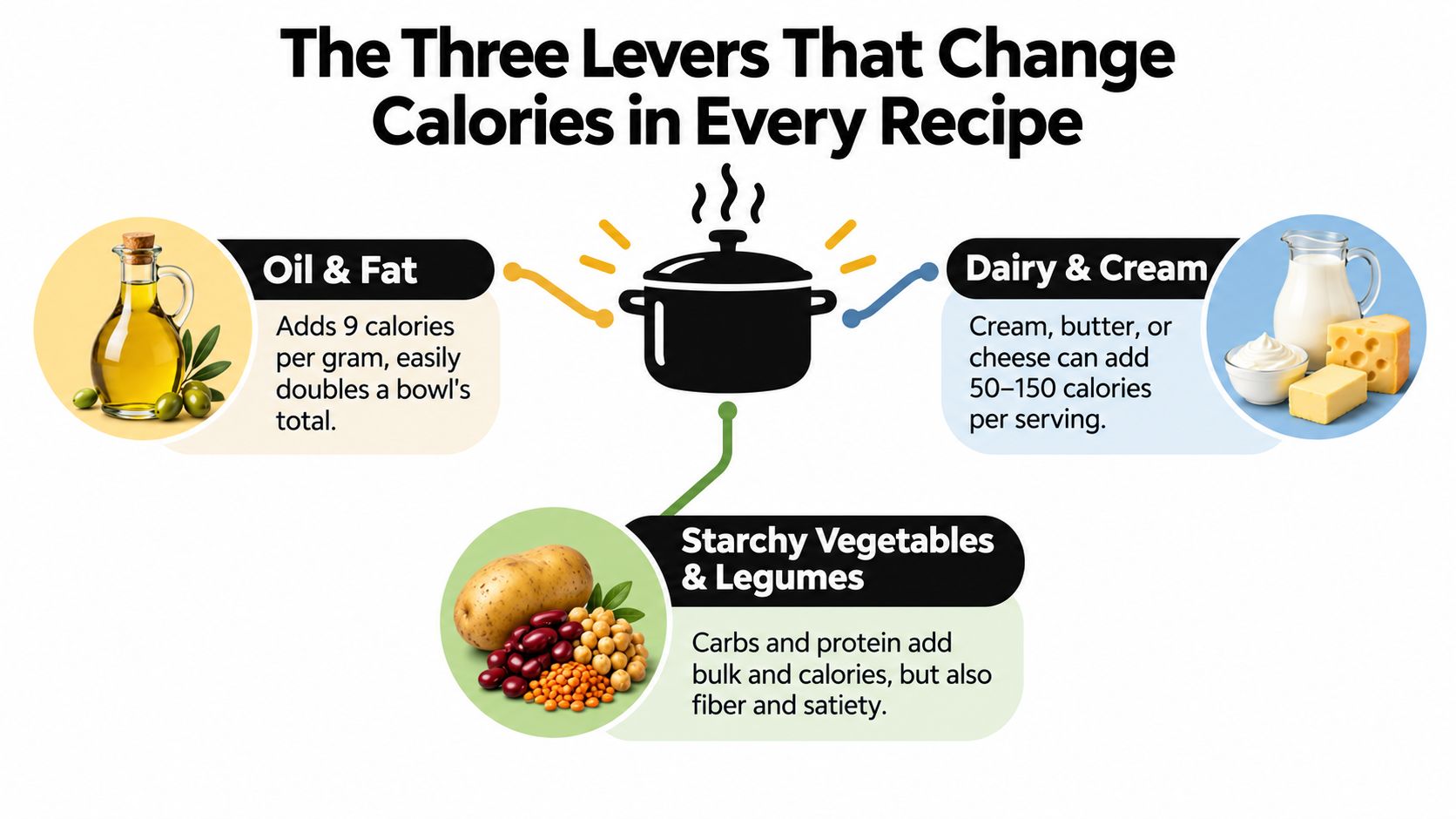
Think of soup like a pot being filled from three taps. The first tap is the broth, which gives the bowl its volume. The second is fat, which doesn't look like much in the pot but can add a lot of calories fast. The third is the chunky stuff, like potatoes, beans, pasta, rice, or cream, which turns a light soup into something denser.
Broth sets the base, fat changes the math
Broth is the water-heavy part of the recipe. It stretches the vegetables and makes the soup feel abundant without adding much energy on its own. That's why broth-heavy soups often stay relatively low in calories.
Fat works differently. Oil, butter, and cream blend into the pot and can raise the calorie total without changing the bowl's appearance very much. You may not see every teaspoon, but the body still counts it.
Starches and legumes make the soup heavier
Potatoes, beans, pasta, grains, and similar ingredients do two jobs at once, they add fullness and they add calories. That's why a bowl with chickpeas or noodles tends to feel more like lunch than a starter. The vegetables still matter, but they're no longer carrying the whole calorie load by themselves.
Homemade soup confusion often comes from here. Two recipes can share tomatoes, celery, onions, and carrots, yet one stays light while the other becomes much more filling because the pot includes oil, beans, or cream. The vegetables didn't change much. The support cast did.
Real Recipe Numbers Side by Side
Published recipes show why a single calorie number for vegetable soup can be misleading. A USDA garden-vegetable soup recipe lists 72.94 calories per serving, with 13 grams of carbohydrates, 4.27 grams of dietary fiber, 4.72 grams of protein, and 1.39 grams of total fat (USDA MyPlate garden vegetable soup). A USDA vegetable soup made with tomatoes, celery, onions, corn, carrots, green beans, peas, and broth lists 58 calories per 1-cup serving (USDA vegetable soup PDF).
A different USDA school recipe for chicken-or-turkey vegetable soup comes in at 69 calories per 1 cup, while the beef-vegetable version reaches 97 calories per 1 cup and includes 8 grams of protein and 3 grams of fat. The pattern is the important part, and the same per-serving variation shows up in other homemade dishes like in this chicken tikka masala calories breakdown. A Mayo Clinic summer vegetable soup is listed at 62 calories per serving with about 1¼ cups per serving, which shows that serving definitions also change the math.
| Recipe | Key Driver | Serving Size | Calories per Serving |
|---|---|---|---|
| USDA garden-vegetable soup | Broth-heavy, low added fat | Recipe-defined serving | 72.94 |
| USDA vegetable soup | Clear vegetable and broth base | 1 cup | 58 |
| USDA chicken-or-turkey vegetable soup | Added meat | 1 cup | 69 |
| USDA beef-vegetable soup | Meat plus higher fat | 1 cup | 97 |
| Mayo Clinic summer vegetable soup | Olive oil added | About 1¼ cups | 62 |
These examples run from 58 to 97 calories per stated serving, a wide spread for recipes all labeled vegetable soup. If a bowl includes more oil, meat, or starch than a broth-heavy version, the calories rise fast, even when the soup still looks familiar in the pot.
A recipe-defined serving is not always a standard cup. A label that says “73 calories” is a recipe estimate, not a universal bowl size, so the serving size has to be checked with the calorie number.
How to Calculate Your Own Bowl with the Batch-Weight Method
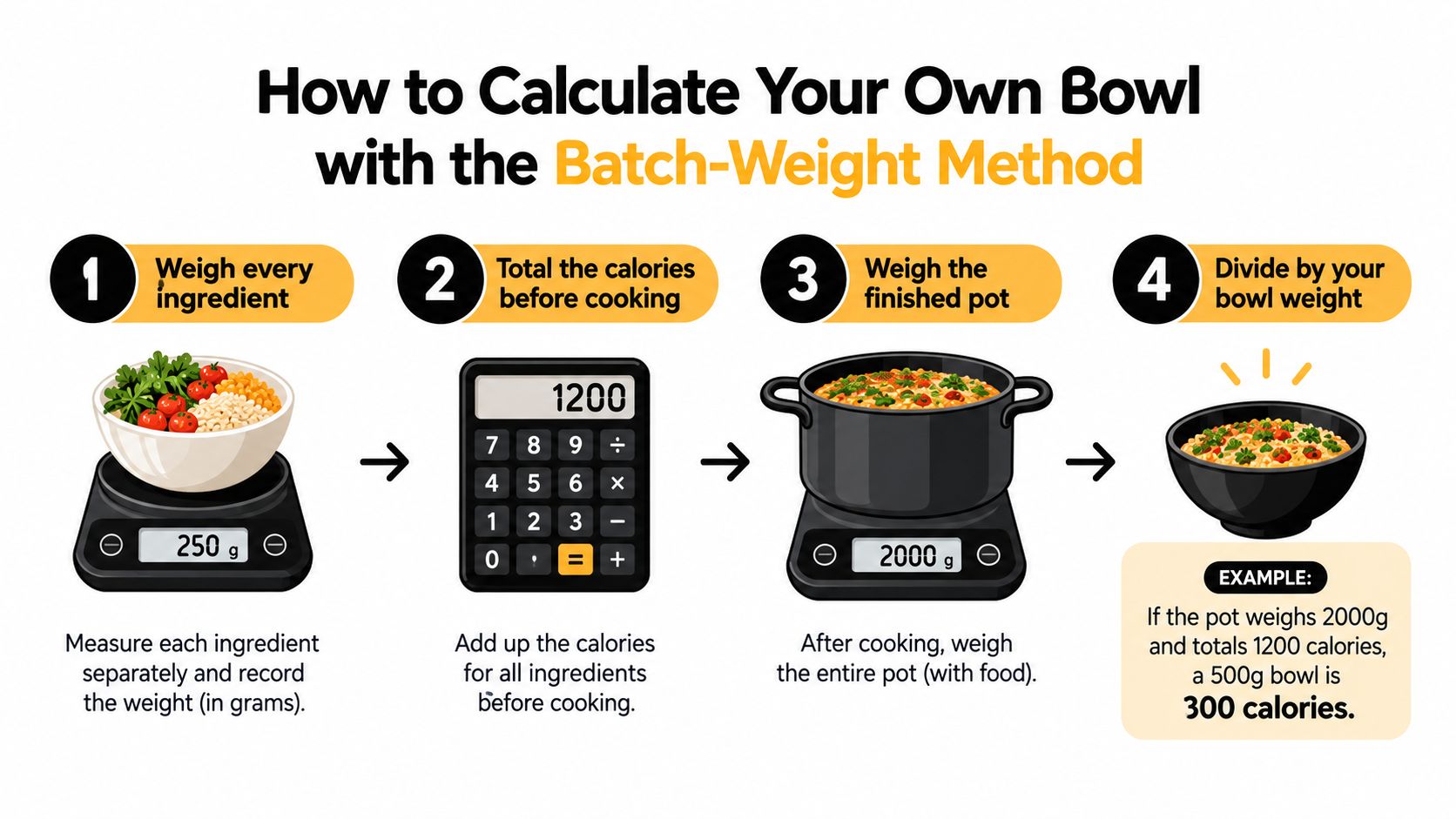
The cleanest way to log homemade soup is to treat the whole pot like a single recipe and then divide it up. Weigh or estimate every ingredient before cooking, total the calories, then weigh the finished soup after it cools. That gives you a simple kcal-per-gram number you can apply to any bowl.
A worked example makes the math feel normal
Say the whole pot totals 2,000 calories and the finished batch weighs 3,000 grams. That means the soup contains 0.667 calories per gram. If your bowl weighs 350 grams, the portion comes out to about 233 calories.
That's the key move. The bowl size matters less than the weight, because ladles, mugs, and bowls all vary. A packed bowl can easily hold more soup than a shallow one, even if they look similar from the top.
Why evaporation changes the answer
USDA cooking research distinguishes moisture loss, moisture gain, and transfer of solids during cooking, which is just a technical way of saying the water level can change while the calories stay in the pot (USDA cooking research PDF). If the soup simmers down, the finished pot weighs less, so each gram contains more calories.
That's why a rough 66 calories per cup can work as a starting point for plain broth-heavy vegetable soup, but it can understate richer versions (prepared vegetable soup reference). When the recipe includes oil, beans, noodles, or meat, the batch-weight method beats a generic cup estimate every time.
If you already weigh meats for meals, the logic is the same. A calories sliced turkey breast guide uses the same kind of portion thinking, just with a different food. Soup works the same way, except the pot is doing more of the work for you.
Weigh the finished pot once, and you've got a better estimate than guessing from the bowl shape.
Broth Only, Bean Enriched, or Creamy Compared
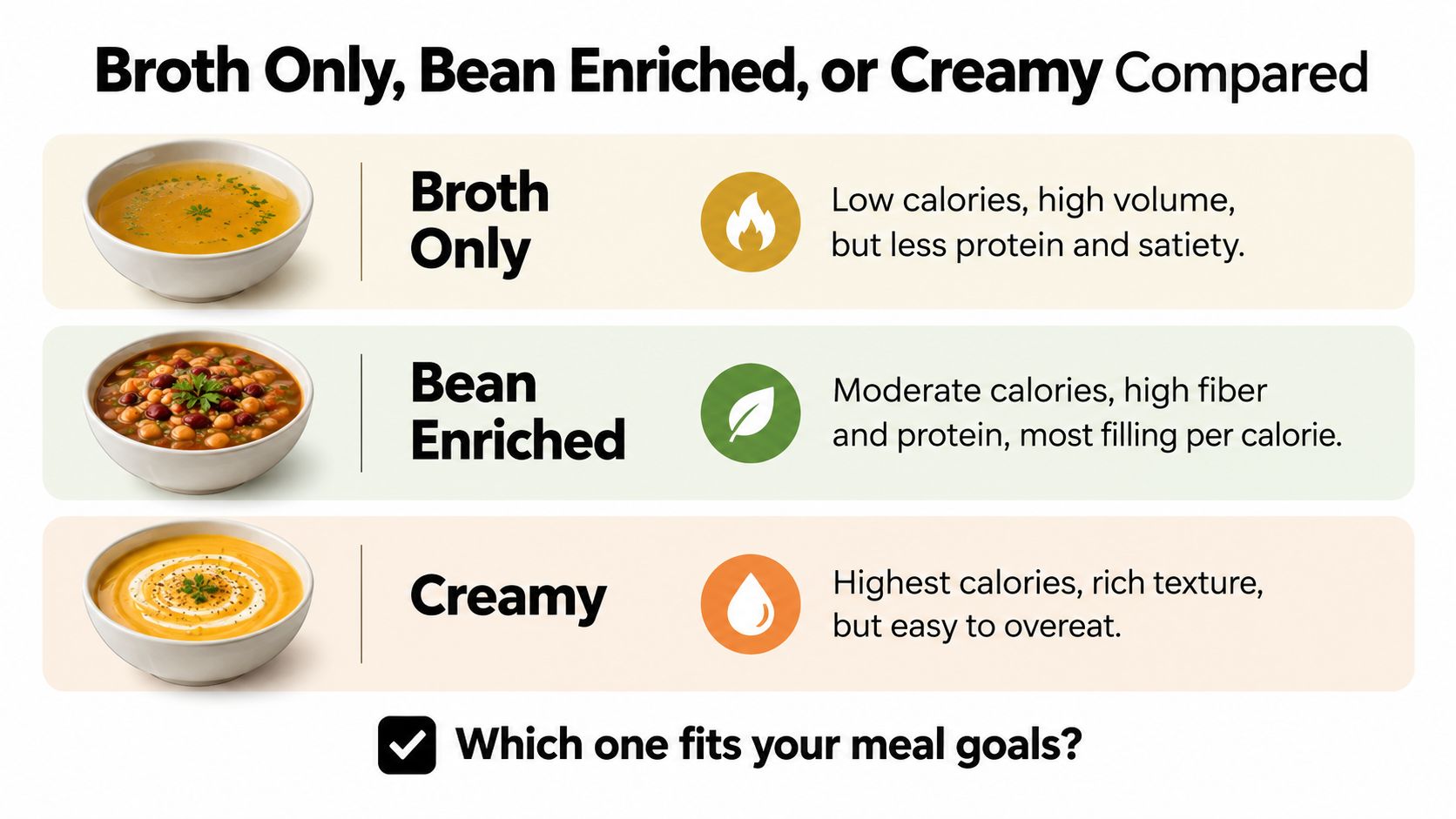
A broth-heavy vegetable soup is usually the lightest option. Add beans and the bowl gets denser, with more protein and fiber in each spoonful. Creamy or oil-rich versions sit higher on the calorie scale and often eat like a full meal even when the ingredient list still looks vegetable-forward.
What changes besides calories
A plain vegetable soup database entry lists roughly 70 calories, 2 grams of protein, and 2 grams of fiber per cup, while a meat-containing version reaches about 108 calories per 245 grams and 8.2 grams of protein (food facts comparison). That spread makes sense once you picture the pot as a mix of water, vegetables, and whatever is carrying the flavor.
Bean-and-vegetable soup changes the math fast. USDA FoodData Central lists canned bean soups in the same rough range as a much more filling bowl, so the calories rise even as the soup gets heartier, and that is the trade people usually make for extra staying power. You can check a bean soup entry directly in USDA FoodData Central.
Sodium deserves attention too. A soup can still be salty even when it looks very clean on the surface, and Mayo Clinic notes that soup can be a major source of sodium depending on the broth and added ingredients. See the sodium guidance in Mayo Clinic's guide to sodium and your health.
Practical rule: if the bowl is salty, oily, or protein-poor, the lowest calorie number is not always the best fit for your meal.
Choosing the right bowl for the job
A broth-heavy bowl works well as a starter. A bean, lentil, or meat version is better when you want soup to carry more of the meal. Creamy soup fits a comfort-food role, but it should be logged like a richer dish, not like a light broth.
The simplest way to judge it is to ask what the bowl is doing for you. If it is mainly warming and filling a gap before the main course, a lighter soup makes sense. If it is lunch on its own, the denser version usually does a better job.
Practical Portion Guidance for Bowls and Meals
The easiest portion mistake is assuming every soup bowl is the same size. A 1-cup serving, a 1.5-cup serving, and a 2-cup serving can feel almost identical in your hands, but the calorie difference is obvious once you've logged the recipe. If the soup is the main meal, the portion usually needs more attention than if it's just a starter.
Use the bowl you actually eat from
The first few times, ladle the soup into a measuring cup so you can calibrate your normal bowl. After that, you'll know whether your “small bowl” is really a cup or closer to two cups. That little calibration step saves a lot of guesswork later.
Look at the surface too. A visible oil sheen, soft creaminess, or dense chunks of potato and bean usually means the bowl deserves a higher estimate than a clear broth with floating vegetables. If the soup seems thin, it still isn't automatically low in calories, but the odds tilt that way.
Match the bowl to the rest of the meal
A broth-heavy bowl often works well with a protein side, especially when you want the soup to stay light. A soup with beans, lentils, meat, or potatoes may already cover more of the meal on its own. Bread, crackers, and cheese can make the meal more satisfying, but they also add to the total, so log them as well.
If you need a simple check, use this:
- Starter bowl: choose broth-heavy soup and keep the portion modest.
- Main bowl: weigh the serving or use a calibrated ladle.
- Heavier recipe: assume the calories are higher if you see oil, beans, pasta, potatoes, or cream.
- More fullness needed: add a protein side or a salad instead of guessing the bowl should magically feel bigger.
The point isn't restriction. It's matching the bowl to the meal you want.
Logging Your Bowl Accurately in Calorie Genie
A photo can get you close, but the details make it honest. A homemade soup photo is especially useful because the bowl usually contains a mix of visible vegetables, broth, and maybe a few things hiding underneath. The app can estimate the bowl, then you can correct the parts that matter most.
The simplest workflow
Snap the bowl, review the ingredient list, and check the portions. If you used two tablespoons of olive oil, extra potatoes, or a scoop of beans, say so in plain language and let the estimate update. That matters because oil and starch change the calorie count far more than a few extra carrot slices.
For packaged ingredients, switch to the barcode scanner when you add broth, canned beans, or croutons with a label attached. That keeps the log aligned with the actual product instead of a generic assumption. The same approach works when you scan a restaurant menu and want to compare soup options before ordering. Calorie Genie's food diary app is built for that kind of quick adjustment.
What to correct first
If the soup seems off, fix the most calorie-dense pieces first. Oil matters. Cream matters. Beans, potatoes, noodles, and meat matter more than a few extra celery pieces. Once those are right, the rest of the bowl usually falls into place.
The health score can also help flag sodium or processing concerns, especially when the soup starts from broth, bouillon, or canned add-ins. It's a quick way to catch the stuff that doesn't show up in a pretty bowl photo.
Putting It All Together for Your Next Pot
Homemade vegetable soup can be a light starter or a full meal, and the difference usually comes down to broth, fat, and starchy mix-ins. The fastest way to stop guessing is to weigh the finished pot, turn the whole recipe into a per-gram number, and log the actual bowl you ate. After that, a photo and a quick correction get you much closer than a generic cup estimate ever will.
If you want a simpler way to log homemade soup without rebuilding the recipe by hand, Calorie Genie AI can estimate the bowl from a photo and let you correct ingredients in plain language. It's a practical fit for soups like this, where oil, potatoes, beans, and broth can change the calories fast.