

Buying the Highest Protein Greek Yogurt sounds simple. Pick the cup with the biggest number, eat it, win. That's exactly where the ranking breaks down.
A 20 gram claim on a large cup and a 20 gram claim on a 5.3 oz cup aren't the same achievement, and protein alone won't tell you about added sugar, fat, calories, or whether you'll enjoy eating it plain before work. Greek yogurt earns its protein through straining, and the controlled comparison showed a 170 gram Greek style serving with 14 grams of protein versus 5 grams for regular yogurt at the same 160 kilocalories, as reported in the controlled nutrition study comparing Greek and regular yogurt. That's a real advantage, but commercial tubs vary by serving size, straining, sweeteners, and added milk protein.
The practical question is fit. A substantial flavored cup may work as breakfast. A plain, unsweetened tub may be better for cooking and portion control. A smaller, lower calorie cup may be the smarter snack. Check the label in front of you, because flavors, package sizes, and formulations change.
Table of Contents
- 1. Chobani High Protein Greek Yogurt
- 2. Oikos PRO
- 3. FAGE Total 0% Plain
- 4. Oikos Triple Zero
- 5. Light + Fit Greek Nonfat Yogurt
- 6. FAGE Total 2% Plain
- 7. Light + Fit Greek Blueberry
- Protein Comparison of 7 Greek Yogurts
- Build a Better Protein Yogurt Shortlist
1. Chobani High Protein Greek Yogurt
The widest protein range in this roundup sits under one brand. Chobani High Protein Greek Yogurt offers up to 20g of protein per 6.7 oz cup, which works out to roughly 3 grams per ounce, and the company says the protein comes from extra straining rather than added protein powder. That keeps the ingredient list shorter than fortified cups.
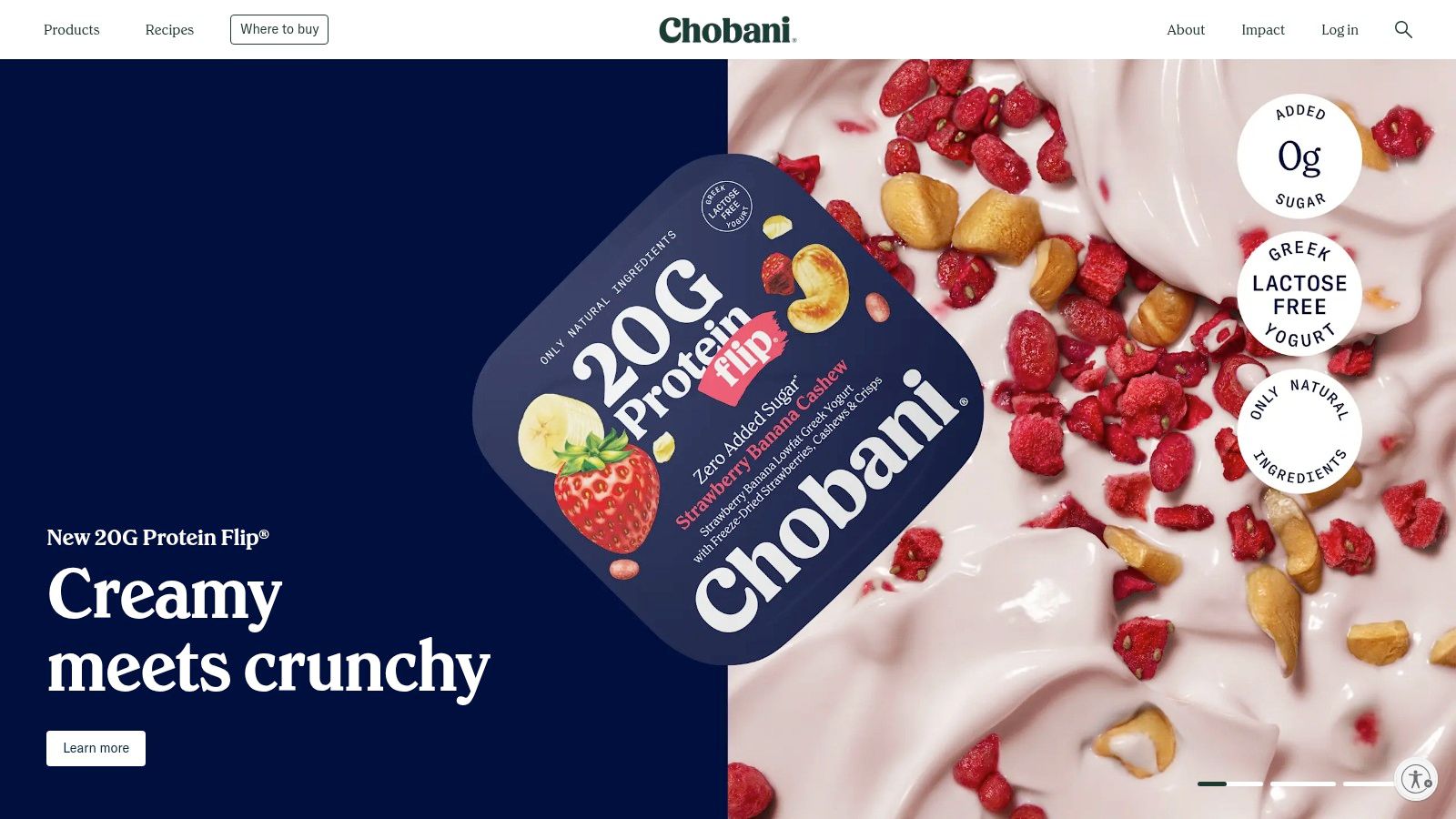
The line also includes 15g and 30g versions, and flavors run from vanilla to mango, cherry berry, and raspberry lemon, according to Chobani's High Protein product page. That variety matters for logging accuracy, since sweetened flavors carry different calories and sugar than the plainest option. Scan the barcode on your specific cup rather than copying the headline protein figure into your tracker.
- Top strength: A breakfast-sized single serving for people who want one cup to cover the morning.
- Flavor choice: Sweet varieties can stand in for a pastry-style breakfast, especially paired with fruit.
- Watch out: Calories, sugars, and ingredients differ by flavor, and store availability varies.
Best Everyday Use
Keep one in the office fridge for the morning you skip breakfast. A 6.7 oz cup covers more ground than a small snack pot, particularly when lunch runs late. If the rest of the day also needs to carry protein, compare it with chicken thighs and their calories before assuming the yogurt does all the work.
Practical rule: Check the flavor, not just the headline. The protein figure is shared across the range; the sugar line is not.
2. Oikos PRO
Oikos PRO packs 20g of protein into a 5.3 oz cup, which makes it a strong protein density candidate among the single serve options listed on Oikos PRO's product information. One detail hides behind the familiar cup: the brand describes it as yogurt cultured ultra filtered milk, a category apart from traditionally strained Greek yogurt.
That labeling reflects how the protein gets there. The formula uses ultra filtered milk and whey protein concentrate, so the cup is more engineered than a two ingredient strained yogurt. The texture still reads as thick and creamy. The pressing question is whether maximum protein in a small portion outweighs a short ingredient list for you.
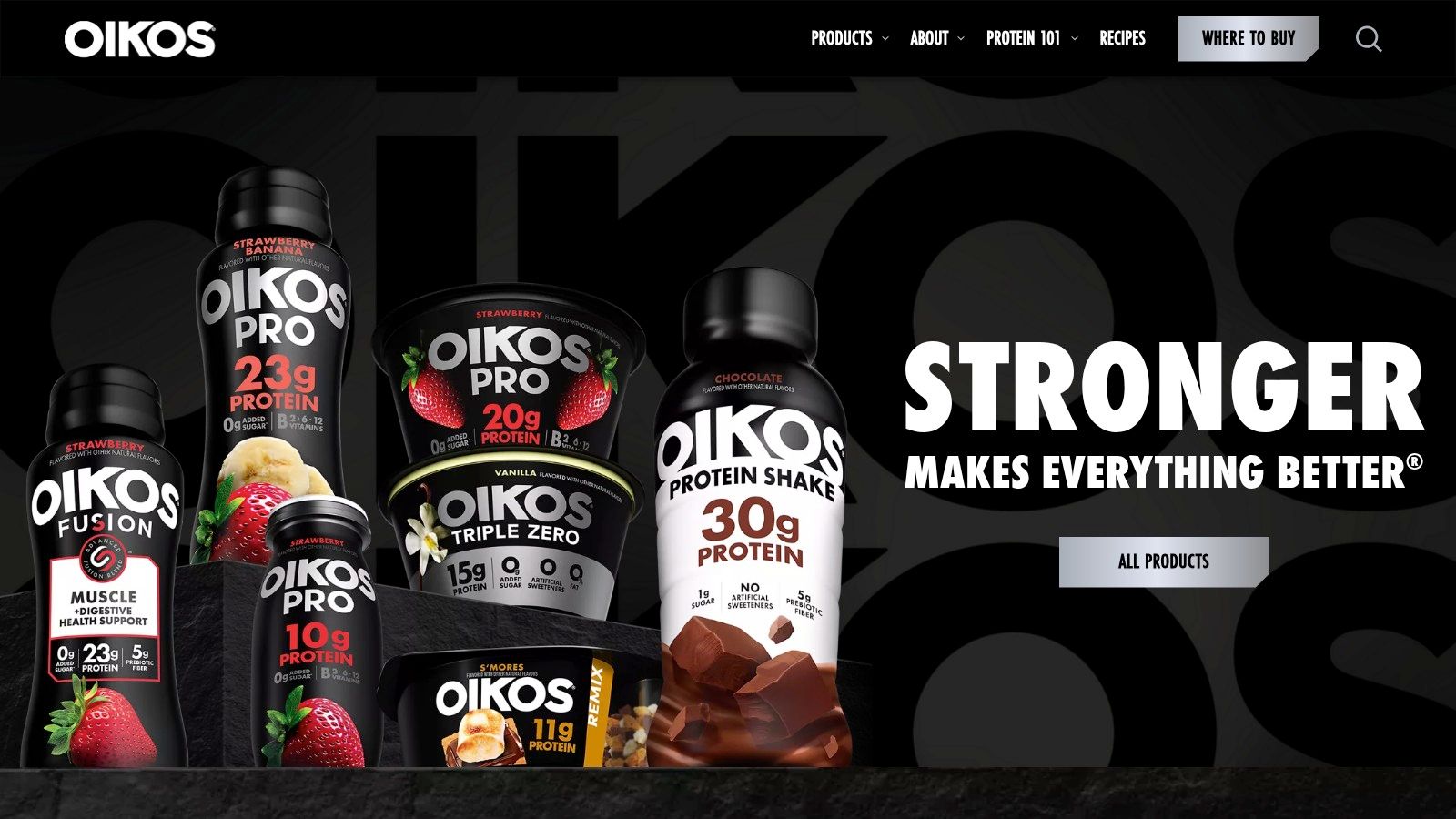
The listed vanilla product shows 0g added sugar and 3g total sugar, based on the nutrition details available from Oikos. That sidesteps the sugar tradeoff that usually comes with flavored yogurt. Numbers shift across flavors though, so scan the barcode on the exact cup you buy before logging it.
Best Everyday Use
It works as a post workout cup or a desk drawer rescue when fridge space allows. Portable, portion controlled, and filling enough to replace a shake on a busy afternoon. Later in the day, let lunch carry a leaner protein such as sliced turkey breast so your protein intake doesn't lean on dairy alone.
The reasonable objection is purity. If fortified protein and a whipped texture aren't your priorities, a plain strained yogurt offers a simpler label and more range in cooking.
3. FAGE Total 0% Plain
The plain option holds its own on protein. FAGE Total 0% Plain provides 18g of protein per 170g serving, and 16g in the smaller 150g cup, according to the listed product nutrition. It is fat free and unsweetened, with 5g of naturally occurring sugar per 170g serving rather than added sweetener.
Two ingredients carry that number: skimmed milk and live active yogurt cultures. No whey concentrate, no thickeners. Whether breakfast ends up sweet with berries or savory with cucumber and herbs is your call, and the label stays the same either way.
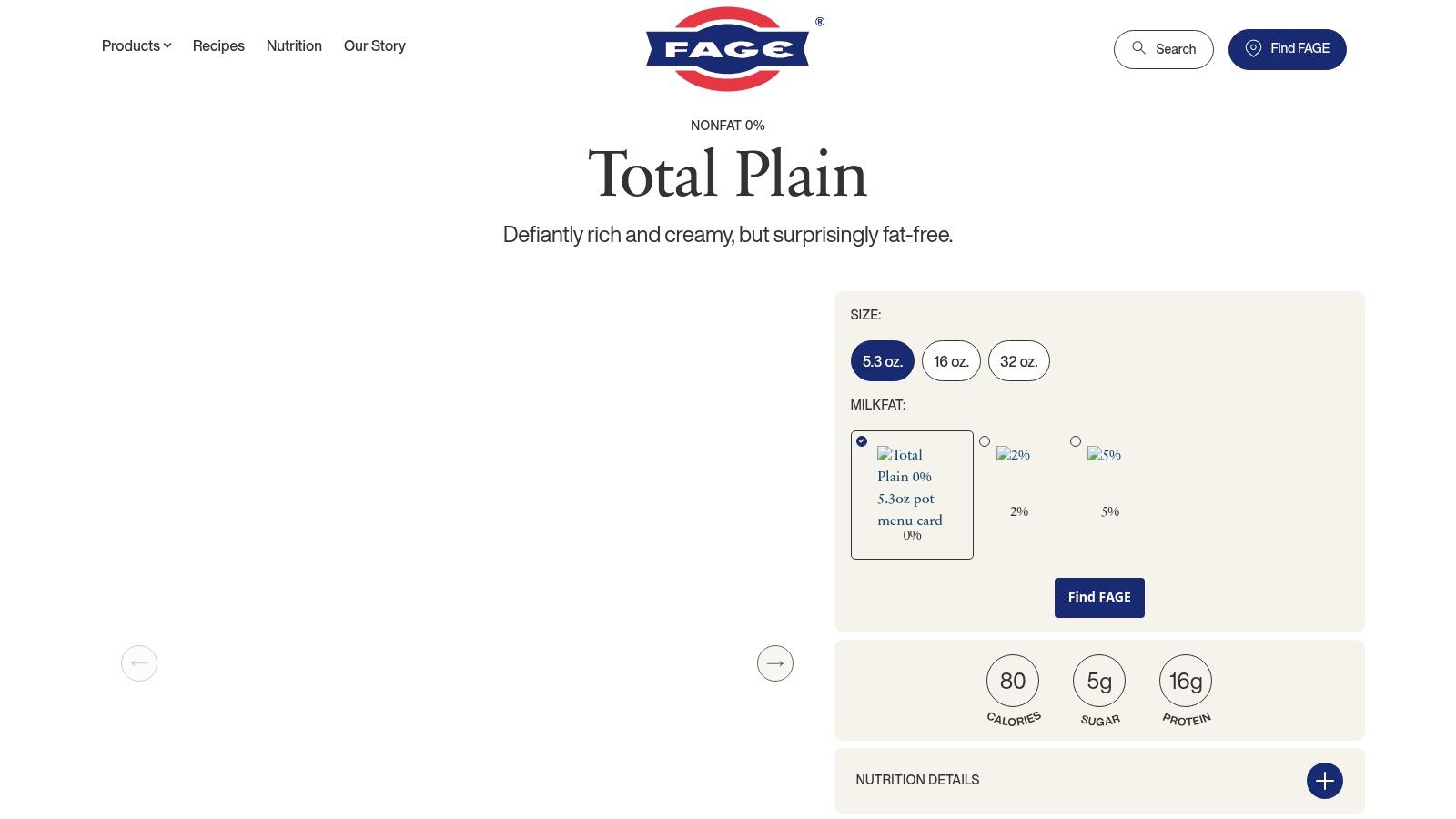
The density checks out against an independent benchmark. USDA FoodData Central lists plain nonfat Greek yogurt at 10.3g protein per 100g, and FAGE's 18g per 170g serving lands just above that rate. A strained two ingredient yogurt can match fortified cups on protein per calorie, which challenges the assumption that the biggest number on the front label wins.
Format is the practical variable. Single cups travel well and log cleanly. The larger tub costs less per serving but asks you to weigh each portion, since the protein count scales with grams rather than a fixed container.
- Ingredient simplicity: Skimmed milk and live active cultures, with no added sugar in the plain version.
- Recipe range: Works in tzatziki, marinades, sauces, overnight oats, and breakfast bowls.
- Main drawback: The tang is direct, and some people won't enjoy it without toppings.
Best Everyday Use
Buy the tub if you will cook with it across the week. Spoon it over roasted vegetables at dinner, then use it again at breakfast. When you scan the barcode or log it manually, enter the actual grams served, since a spooned portion rarely matches the 170g reference on the label. That flexibility pays off once you know how many calories you need a day, because one product can cover both a recipe ingredient and a standalone protein source.
4. Oikos Triple Zero
This is the flavored middle ground. Oikos Triple Zero vanilla provides 15g of protein per 5.3 oz cup. The listed vanilla version has 0g added sugar, 0g fat, and 90 calories per serving, according to the brand's product page.
Those numbers make the tradeoff easy to read. You give up some protein compared with the 18g to 20g options, but you get a sweet, ready to eat cup that still fits a tight calorie budget. It's sweetened with stevia leaf extract, which some people like and others notice as a lingering aftertaste.
Why Protein Density Changes the Ranking
Harvard's guidance on choosing Greek yogurt and comparing protein content lists nonfat Greek yogurt at about 18g protein and 104 calories per serving, while commercial products can contain as much as 20 to 25g sugar per 5 ounce container. That context is useful because it shifts attention from the protein headline to what else arrived in the cup. Triple Zero's appeal is avoiding added sugar while keeping a substantial portion of protein.
- Portable protein: A modest cup that can bridge lunch and an evening workout.
- Flavor convenience: No toppings or measuring required.
- Limitations: Flavored varieties include additional ingredients, and stevia taste isn't for everyone.
Best Everyday Use
Try it as an afternoon snack when a plain tub feels like work. Eat it alone, notice whether it holds your appetite, and compare that result with a larger plain serving on another day. Satisfaction matters more than winning a theoretical protein table.
5. Light + Fit Greek Nonfat Yogurt
A 12 gram cup can still earn its spot when consistency is the goal. Light + Fit Greek Nonfat Yogurt provides 12g of protein per 5.3 oz cup, and the listed blueberry product has 80 calories per cup, according to the brand's product information. Judged against a plain tub, that reads as a controlled snack rather than a meal base.
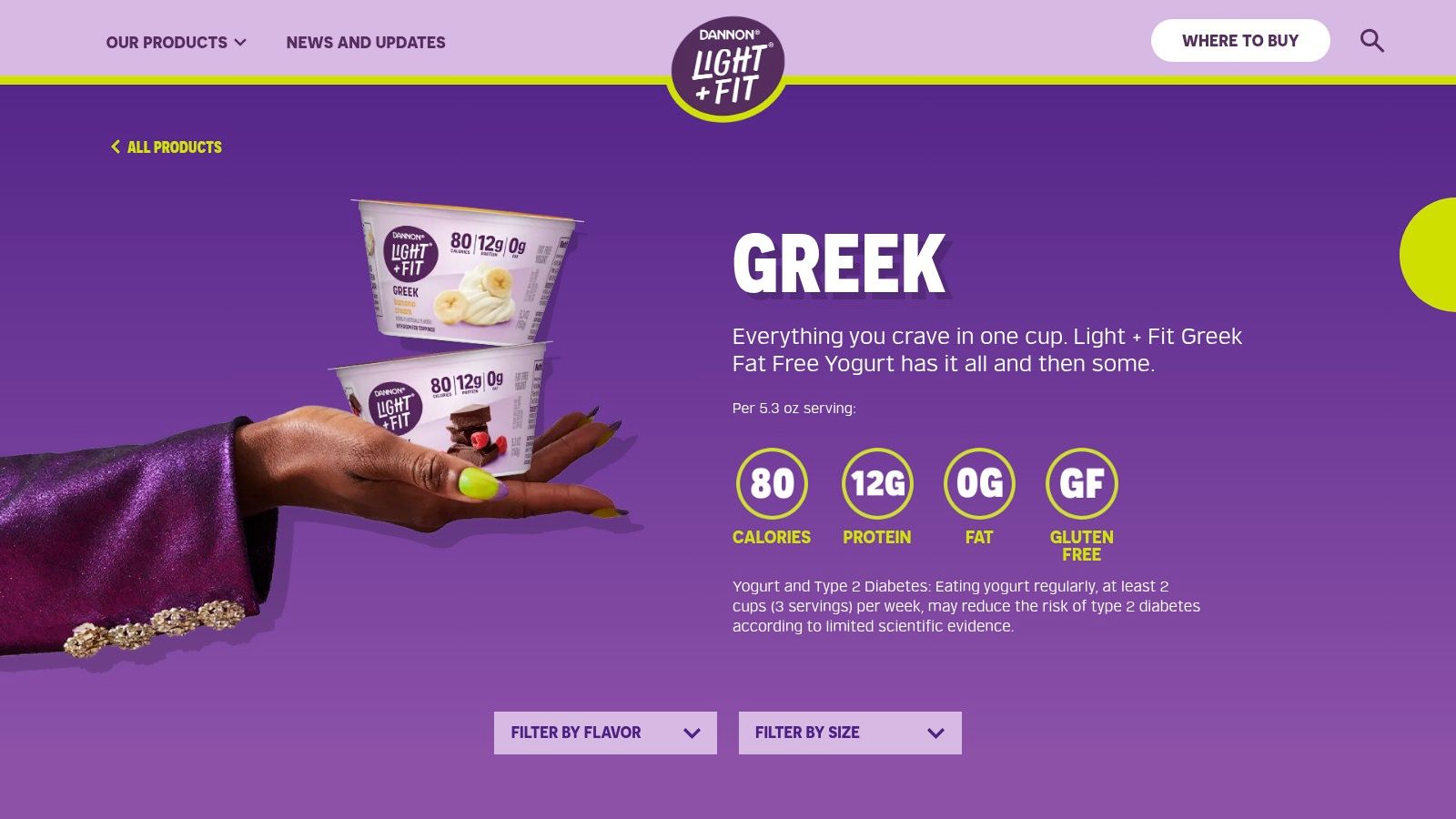
The practical case rests on format. Multipack cups mean a household can stock several flavors without committing to a large container, and each portion is fixed at purchase. For shoppers who repeatedly abandon plain tubs before finishing them, a lower protein option that gets eaten beats a denser one that expires.
The Sweetener Tradeoff
The Greek line uses fructose, sucralose, and acesulfame potassium, and sugar varies by flavor, based on details shown for Light + Fit Greek yogurt. Scan the label of each flavor before buying a case. If a short ingredient list ranks first for you, FAGE fits that priority better. If rotating flavors keeps yogurt in your routine, the sweetener load may be an acceptable cost.
A yogurt you'll eat four times a week can support your routine better than a higher protein tub you keep postponing.
Best Everyday Use
Pack a cup with lunch as a portioned sweet finish. The protein is modest but the calorie cost is low, which leaves room for a protein focused dinner. Log each flavor separately in your tracker, since scanning the barcode per cup avoids the error of treating the whole line as one identical entry.
6. FAGE Total 2% Plain
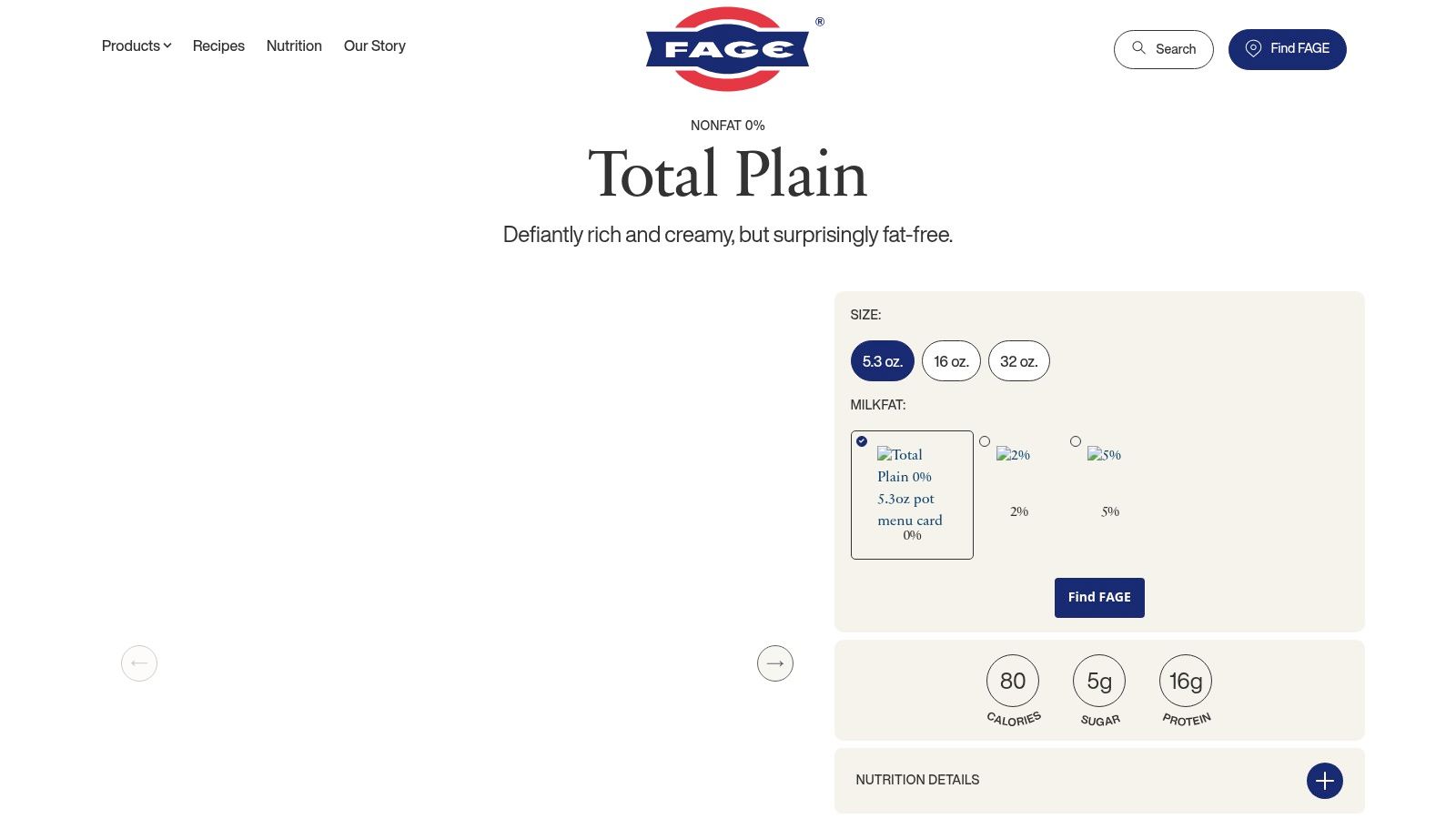
The argument for 2% milkfat starts with adherence. FAGE's Total 2% Plain product information lists 17g of protein per 170g serving, a small step down from the fat free version covered earlier. In exchange, the yogurt gains a creamier texture that holds up on its own, without fruit or honey doing the work.
That difference matters more than the label suggests. Shoppers who rank tubs only by protein grams often pick the leanest option, then drift away from it because every bowl tastes thin. Total 2% keeps the plain, unsweetened profile and a short ingredient list of milk and live active cultures, so the extra richness comes from milkfat rather than added sugar.
Fat level shows up in protein density. USDA's whole milk Greek yogurt reference provides 8.78g protein per 100g, showing how protein per gram drops as fat rises even within strained yogurt. Total 2% sits between the leanest benchmark and that whole milk reference point, a middle ground for buyers who want plain yogurt without the thinnest texture.
- Texture advantage: Creamier than fat free strained yogurt, with no added sugar in the plain version.
- Kitchen use: Suitable for dips, dressings, curries, and serving with fruit.
- Drawback: More fat and calories than Total 0%, and buyers used to sweetened cups may still want toppings.
Best Everyday Use
Use it where yogurt anchors the meal. A breakfast bowl with berries tastes fuller without tipping toward dessert, and the same tub can become a pan sauce or curry base at dinner, a job pre sweetened cups cannot do. Since a large tub has no fixed portion, weigh each serving once and log it by barcode in your tracker so the entry matches the amount you ate.
7. Light + Fit Greek Blueberry
Flavored lines are not nutritionally interchangeable, so this blueberry cup earns a separate look from the nonfat entry above. Light + Fit Greek Blueberry provides 12g of protein per 150g cup, with 80 calories and 0g fat on the listed nutrition label. Blueberry puree is included, and the single serving format keeps the decision simple.
Context helps explain the protein number. Harvard's Nutrition Source describes Greek yogurt as strained yogurt and notes that international standards set strained yogurt at at least 5.6% protein, versus 2.7% for other yogurt. The word "Greek" describes a straining style rather than an origin guarantee, which is why the nutrition panel tells you more than the country language on the cup.
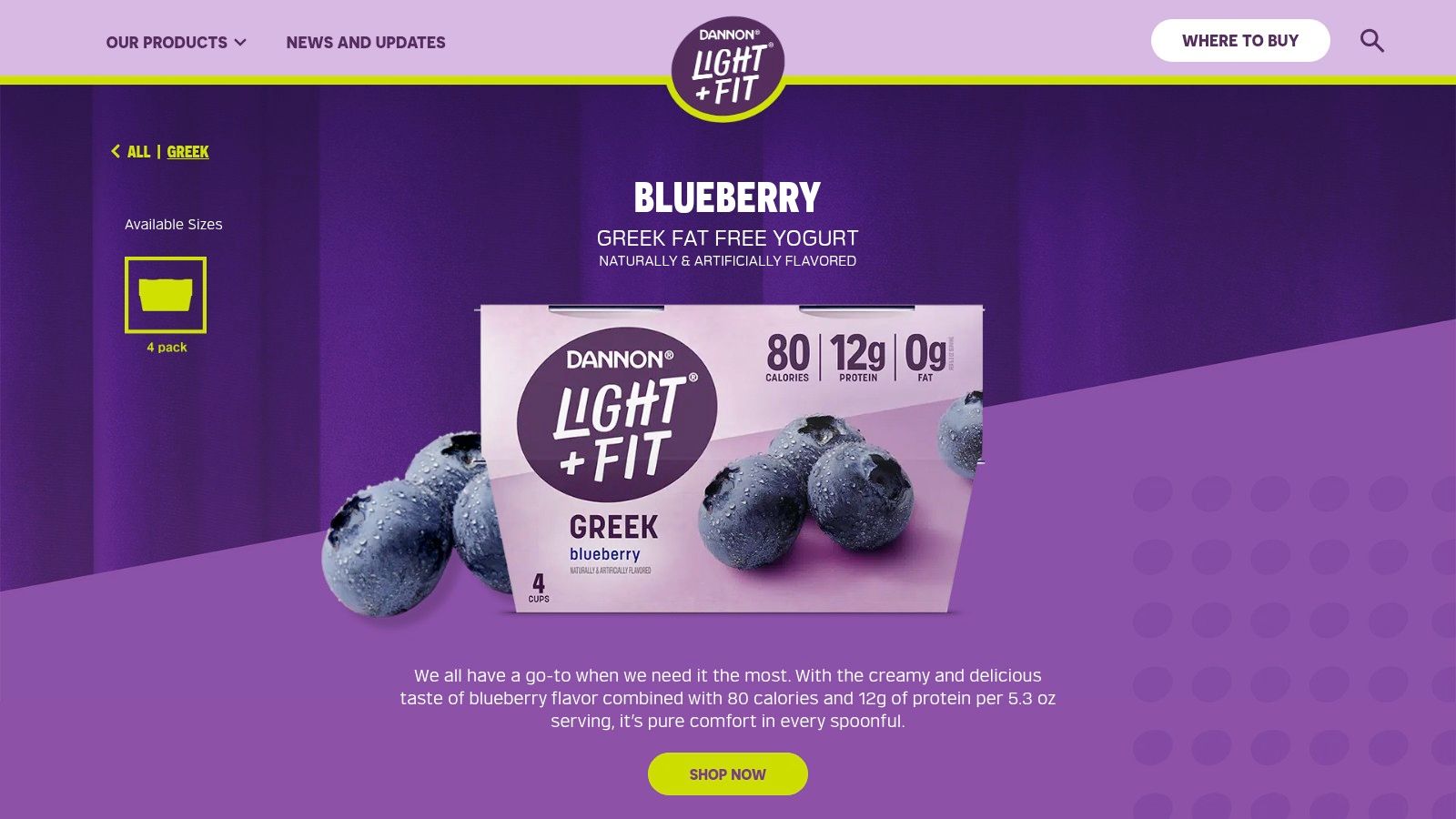
The blueberry version uses fructose, sucralose, and acesulfame potassium, as shown in the ingredient details for this specific Light + Fit flavor. That matters if you prefer to avoid non nutritive sweeteners. It also carries less protein than several options above, so calorie control and convenience are the reasons to pick it over a plainer, denser cup.
Best Everyday Use
Use it as a grab and go snack in a commute bag or gym locker fridge. It gives you a fixed portion and familiar fruit flavor on days when a plain cup would stay uneaten. Because the cup is a sealed single serving, one barcode scan logs the exact entry in your tracker with no weighing or guesswork. Keep it in the snack role rather than promoting it to a full breakfast. On a light appetite day, add nuts or eat it after eggs. On a snack day, let it do the smaller job well.
Protein Comparison of 7 Greek Yogurts
| Product | Protein per Serving | Nutrition / Ingredient Notes | ⚡ Convenience | ⭐ Key Advantages | 💡 Ideal Use |
|---|---|---|---|---|---|
| Chobani High Protein Greek Yogurt | Up to 20g per 6.7 oz | Brand says protein comes from extra-straining; nutrition varies by flavor | Single-serve cups; several flavors and protein levels | High protein with no added protein powder, according to the brand | Flavored, ready-to-eat high-protein snack |
| Oikos PRO | 20g per 5.3 oz | Vanilla lists 0g added sugar and 3g total sugar; contains whey protein concentrate | Single-serve cup | High protein in a modest portion | Thick, Greek-style yogurt with no added sugar in vanilla |
| FAGE Total 0% Plain | 18g per 170g | Unsweetened; skimmed milk and live cultures; 5g naturally occurring sugar | Single cups or larger tubs | Short ingredient list and no added sugar | Cooking, savory dishes, or customizing with toppings |
| Oikos Triple Zero | 15g per 5.3 oz | Vanilla lists 0g added sugar, 0g fat, and 90 calories; sweetened with stevia | Single-serve cup; flavored varieties | Convenient flavored option with no added sugar in vanilla | Shoppers seeking a lower-calorie, sweetened cup |
| Light + Fit Greek Nonfat Yogurt | 12g per 5.3 oz | Nutrition varies by flavor; Greek line uses fructose, sucralose, and acesulfame potassium | Single cups and multipacks; many flavors | Portionable snack with a broad flavor range | Multipacks and snack-sized servings |
| FAGE Total 2% Plain | 17g per 170g | Unsweetened; made with milk and live cultures; contains 2% milkfat | Available in cups and larger tubs | Creamier texture with a short ingredient list | Plain yogurt for eating or cooking |
| Light + Fit Greek Blueberry | 12g per 150g | 80 calories and 0g fat; includes blueberry puree and listed sweeteners | Grab-and-go single cup | Lower-calorie flavored option | Convenient blueberry snack |
Build a Better Protein Yogurt Shortlist
Start with the job. Choose a 20g cup when you want a substantial, ready made breakfast. Choose plain strained yogurt when ingredient simplicity and cooking flexibility matter most. Choose a smaller flavored cup when portion control and convenience will determine whether you eat it at all.
Then normalize the comparison. Protein per cup favors bigger containers, so look at serving size beside protein, calories, fat, and added sugar. A product can look stronger because there is more of it.
Ingredient priorities split the list cleanly. FAGE Total 0% and Total 2% keep the decision centered on milk, cultures, and how much creaminess you want. Oikos PRO uses ultra filtering and added whey protein concentrate to reach its target in a smaller cup. Light + Fit and Triple Zero ask you to consider sweeteners as part of the convenience. None of those tradeoffs is automatically wrong. They're wrong only if they're hidden.
Flavor is another label trap. Vanilla nutrition doesn't prove blueberry nutrition, and one cup size doesn't prove another. Check the current package before logging, especially when you're switching flavors inside the same brand.
Label check: Compare protein against the serving you'll actually eat, then scan for added sugar before you decide the winner.
For packaged dairy, scan the barcode, confirm the serving quantity, and save that exact product as a reusable item. If you eat half a tub or add fruit, adjust the entry rather than logging a generic Greek yogurt. The small correction keeps your protein total honest without turning breakfast into spreadsheet work.
A useful next step is a two product test. Log one finalist for a few mornings, then try the other under similar conditions. Note hunger, taste fatigue, cost, and whether the tub gets finished. Repeat after trying a different flavor or package size.
There's no universal winner because your constraints aren't universal. The best shortlist gives you one high protein breakfast cup, one plain kitchen staple, and one smaller snack option. With those three roles covered, you can stop chasing the loudest number and start buying the yogurt that fits the day.
Compare your finalists properly by scanning each barcode with Calorie Genie AI, checking protein, calories, added sugar, and the serving you'll eat. Save the best fit to your diary, track it against your daily protein target, and skip the manual database searching next time you're standing in the dairy aisle.