
Does your breakfast contain much protein, or does it just look like a high-protein meal because there's an egg on top? Toast, oats and fruit can make a good breakfast, but reaching a meaningful protein target usually takes a deliberate combination, not a sprinkle of seeds.
A 30-gram breakfast is a practical benchmark, not a magic threshold. Sports-nutrition guidance summarized by Health describes approximately 20–40 g of high-quality protein per eating occasion as useful for supporting muscle protein synthesis. Your total daily intake still matters more than getting breakfast mathematically perfect.
These 30g protein breakfast ideas use ordinary foods, from yogurt and cottage cheese to salmon and tofu. Each includes protein math you can adjust, rather than a fixed total that assumes a particular brand. Where products vary too much for a reliable universal count, use the label-based calculation instead. Nutrition values are helpful estimates, not medical advice, and your portions, ingredients and preparation will change the finished meal.
Table of Contents
- 1. High-Protein Greek Yogurt Bowl
- 2. Whole Egg and Egg White Scramble with Cheese
- 3. Cottage Cheese Protein Pancakes
- 4. Turkey Sausage and Egg Breakfast Burrito
- 5. Smoked Salmon and Egg Toast
- 6. Protein Overnight Oats
- 7. Tofu and Edamame Scramble
- 7 Breakfast Ideas at a Glance
- Hit Your Morning Protein Target Every Day This Week
1. High-Protein Greek Yogurt Bowl
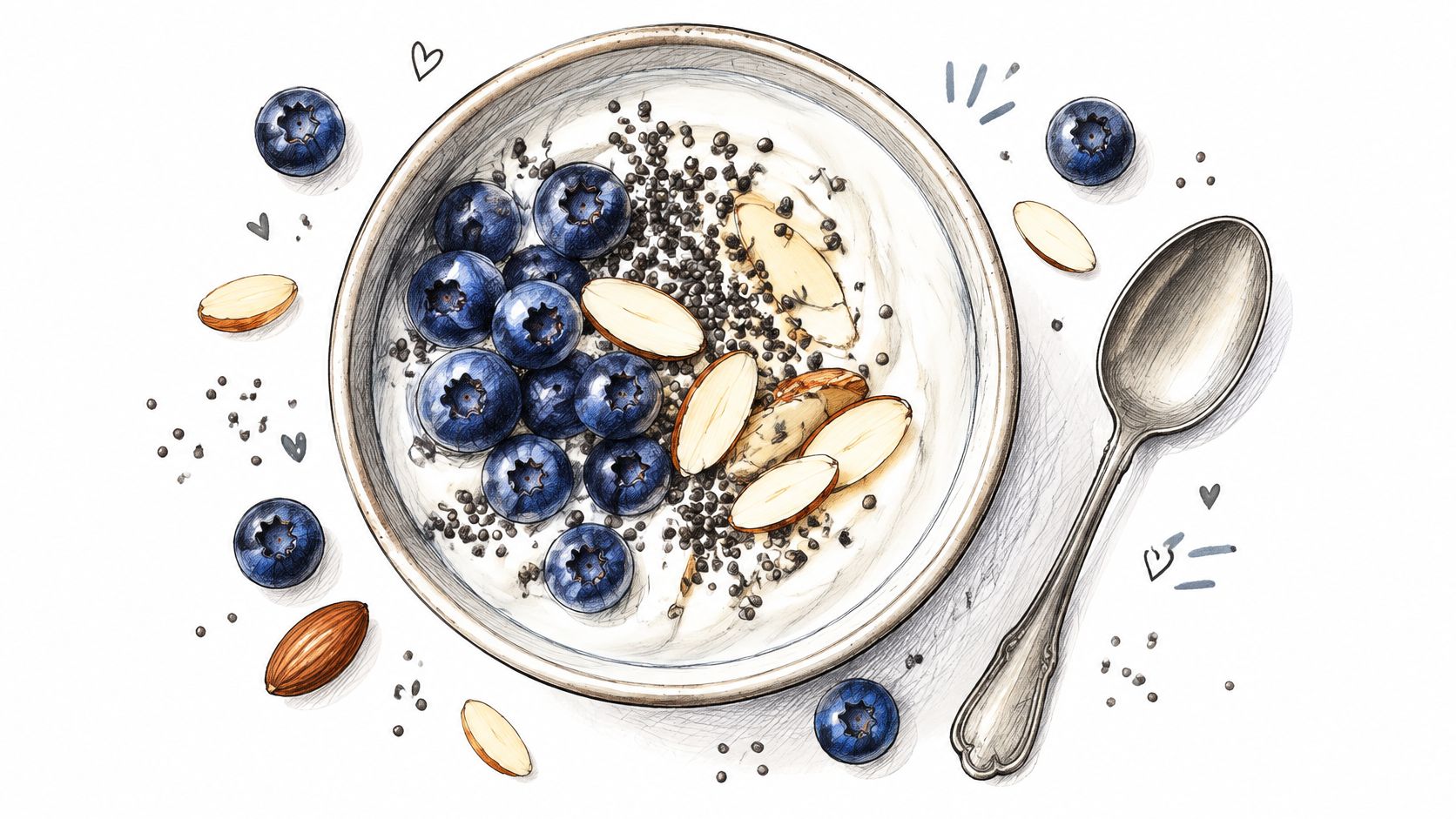
Start with enough yogurt to carry the protein target, then add toppings for flavor and texture. A modest spoonful of yogurt buried under granola is a different breakfast, even if the ingredients look similar.
Protein math: USDA FoodData Central values summarized by Verywell Health put plain nonfat Greek yogurt at approximately 10.3 g of protein per 100 g, so a 290–300 g portion supplies about 30 g before toppings. Treat that as a starting estimate, then check your tub's label.
Make the yogurt do the work
Spoon the yogurt into a bowl and add blueberries, chia seeds and sliced almonds. Keep the crunchy ingredients separate until you're ready to eat, especially if you're packing breakfast for work. Stirring everything together the night before produces a softer, thicker bowl.
For a savory version, use cucumber, cherry tomatoes, dill and black pepper. Finish with olive oil rather than sweetener, and serve toast alongside if you want something warm.
- Check the product: Our guide to the highest-protein Greek yogurt options helps you compare the base rather than guessing from the packaging.
- Weigh the yogurt: A kitchen scale is more consistent than a heaped cup, particularly with thick yogurt.
- Adjust the texture: Stir in a splash of milk if the bowl feels too dense, then include it in your food log.
This is the simplest option for a morning when cooking isn't happening. The trade-off is volume: if a large yogurt portion feels tiresome, choose a mixed breakfast instead.
2. Whole Egg and Egg White Scramble with Cheese
A scramble works best when you decide how much protein the eggs contribute before adding cheese. Otherwise, it's easy to keep increasing the cheese while barely noticing how much you've used.
Protein math: The USDA-linked nutrition values summarized alongside the Dietary Guidelines for Americans put a large egg at about 6 g of protein, making three eggs approximately 18 g. Use the liquid egg-white carton to calculate the remaining protein needed for your breakfast target, then count cheese separately.
Cook the vegetables first
Soften chopped mushrooms, spinach or bell pepper in a nonstick skillet before pouring in the eggs and measured whites. Mushrooms release moisture, so let that evaporate rather than trapping it in the scramble.
Lower the heat, add the egg mixture and move it gently with a silicone spatula. Fold in feta or shredded cheddar near the end, then take the pan off the heat just before the eggs look completely dry.
Cooking rule: Extra egg whites help with protein, but high heat makes a white-heavy scramble rubbery. Use gentle heat rather than trying to finish faster.
For a desk-bound morning, pack the scramble with whole-grain toast in a separate container. For a breakfast eaten immediately, serve it straight from the skillet with salsa.
Measure cooking oil or butter independently if you're tracking calories. They belong in the meal estimate even though they aren't doing the protein work, and cheese shouldn't disappear into a vague entry for scrambled eggs.
3. Cottage Cheese Protein Pancakes
These aren't diner-style pancakes. Cottage cheese and eggs make a soft, custardy pancake, and expecting a tall, fluffy stack is the quickest route to disappointment.
Protein math: Reported values summarized by Verywell Health range from 12–14 g per half-cup of cottage cheese and 6–7 g per egg. For your batter, calculate the cottage-cheese contribution from its label, add the eggs, and adjust the dairy portion until the batch reaches your intended protein target.
Blend smooth and cook small
Blend cottage cheese with eggs, banana and cinnamon until no curds remain. Add oats if you want a more substantial batter, then let it stand briefly so you can judge its thickness before adding more.
Cook small rounds in a lightly greased nonstick pan over low to medium heat. Wait until the underside holds together before sliding a thin spatula underneath. If the pancake folds or tears, let the next one set longer rather than turning up the burner.
Serve with raspberries and cinnamon for a simple finish. Nut butter works too, but portion it deliberately rather than treating it as a free protein topping.
- For meal prep: Cool the pancakes before packing so condensation doesn't make them soggy.
- For reheating: Use a skillet for delicate pancakes. A toaster works better for firmer, oat-containing versions.
- For accurate portions: Calculate the protein in the whole batter, then divide according to how much of the batch you eat.
4. Turkey Sausage and Egg Breakfast Burrito
The burrito is the most useful option when breakfast must travel. Its weakness is hidden variability: sausage links, tortillas and handfuls of cheese aren't interchangeable portions.
Start with a whole-wheat tortilla, scrambled eggs, cooked turkey sausage and sautéed peppers. Add drained black beans if you want a more substantial filling, and keep salsa fairly thick so it doesn't soak through the wrap.
Use package math, not a generic burrito entry
Protein math: Add the protein in your egg portion, the weighed sausage serving, the tortilla and the measured cheese. If the total falls short of your target, increase the sausage or beans according to their labels instead of assuming the tortilla will close the gap.
The sausage package matters here. Don't log turkey sausage as plain turkey meat, because the ingredients and serving sizes differ. If you substitute sliced turkey, use our sliced turkey breast calorie guide to understand the different ingredient you're working with.
- Dry the filling: Cook moisture out of peppers and drain beans thoroughly.
- Wrap after cooling: Let the hot filling stop steaming before assembling burritos for the freezer.
- Reheat properly: Remove foil before microwaving, turn the burrito during reheating and check that the center is hot throughout.
A burrito that rolls neatly is more useful than an overfilled wrap that leaks. Serve extra filling alongside rather than forcing everything inside.
This breakfast trades some ingredient simplicity for portability. Check sodium across the sausage, tortilla, cheese and salsa rather than judging the sausage alone.
5. Smoked Salmon and Egg Toast
Smoked salmon is best treated as a measured protein ingredient, not a decorative ribbon. Pair it with eggs and sturdy whole-grain toast, then use lemon, dill and cucumber to balance the richness.
Toast the bread while you cook the eggs. Scrambled eggs are easier for a rushed morning; poached eggs suit a breakfast you'll eat sitting down, where a runny yolk won't become a transport problem.
Calculate the salmon portion backward
Protein math: Start with the protein in your eggs, subtract that from your breakfast target, then use the smoked-salmon label to calculate the portion that supplies the remainder. Count the bread afterward rather than relying on an assumed protein value for every slice.
This approach is more dependable than claiming that any package of salmon plus any eggs makes the same breakfast. Weigh the salmon before assembling the toast, especially when the slices are folded tightly together.
Spread a thin layer of cream cheese if you like it, then add salmon, eggs and herbs. Cream cheese is a condiment here, not the main protein source.
- For better texture: Add the salmon after the hot eggs are cooked rather than stirring it through the pan.
- For less saltiness: Use cucumber and lemon, and taste before adding capers or extra salt.
- For a packed breakfast: Keep the toast separate from the toppings until you're ready to eat.
The main trade-offs are cost and saltiness. This makes a pleasant change from yogurt or oats, but you don't need to make it your everyday breakfast to benefit from having it in the rotation.
6. Protein Overnight Oats
Overnight oats become a protein breakfast because of what you mix into them, not because soaking oats changes their protein content. Greek yogurt and protein powder are the ingredients to calculate first.
Mix rolled oats with plain Greek yogurt, milk and protein powder in a sealed jar. Stir thoroughly, scraping the bottom where dry powder tends to collect, then refrigerate overnight.
Measure the powder instead of trusting the scoop
Protein math: Add the labeled protein from the oats, yogurt and milk, then calculate how much powder is needed to reach your target. A full scoop isn't automatically the right amount, and using one without checking can produce a much thicker breakfast than you intended.
For ingredient swaps, our guide to adding protein to oatmeal covers options beyond adding more powder. Choose the combination you enjoy eating cold rather than building a jar around the largest possible protein total.
Vanilla powder works with banana and cinnamon. Chocolate powder works with cocoa and strawberries, though the finished sweetness depends on the powder itself.
Texture fix: Make the mixture slightly looser than you want to eat it. Oats and protein powder continue absorbing liquid while the jar rests.
Stir again in the morning and add milk gradually if needed. Keep nuts or granola separate until serving so they stay crunchy.
This is a good commuter breakfast because the preparation happens beforehand. Its main drawback is texture: if you dislike thick, cold oats, don't force the habit. The yogurt bowl or a reheated burrito may fit your mornings better.
7. Tofu and Edamame Scramble
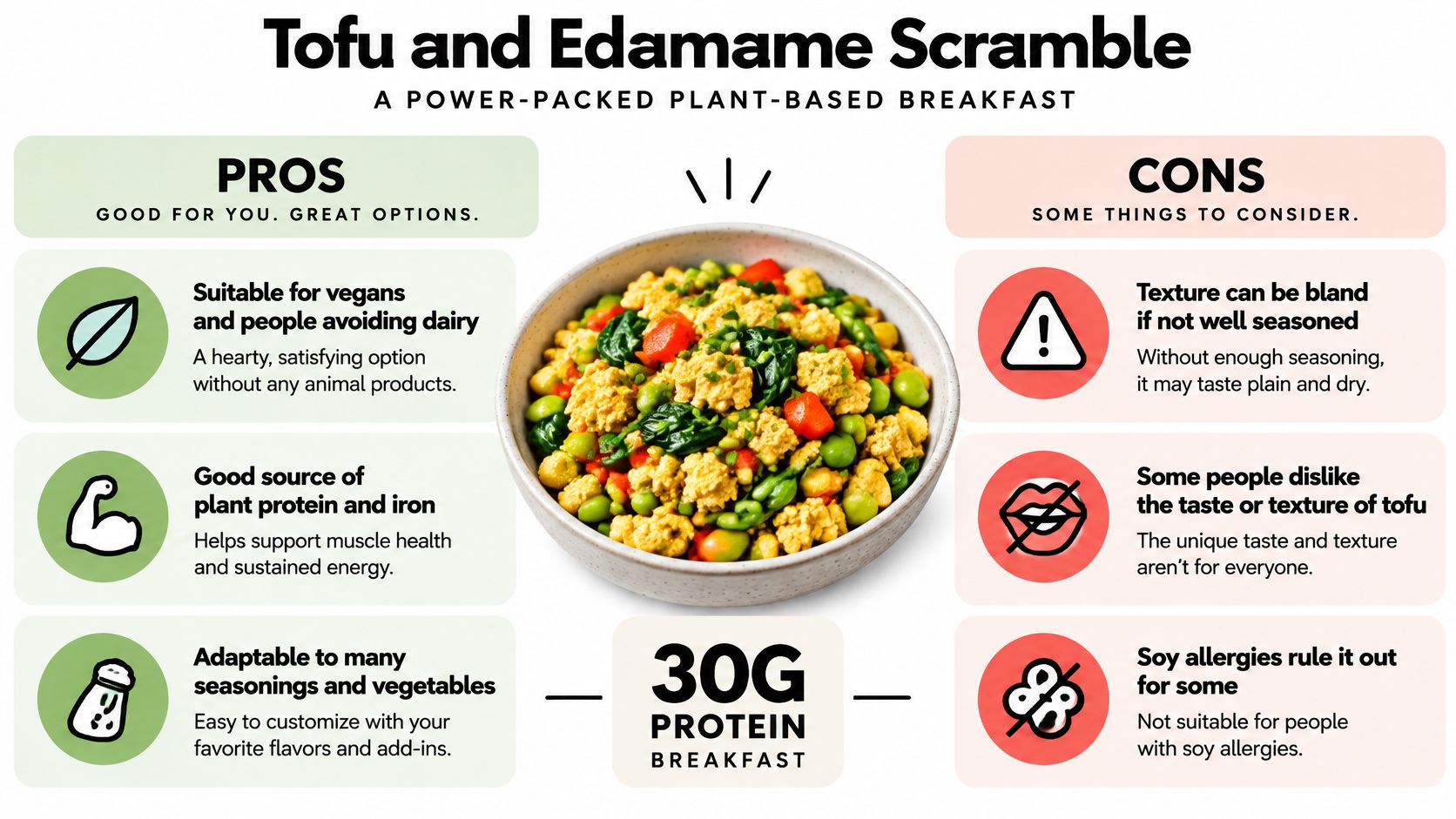
Firm tofu needs space in the pan if you want browned edges instead of a pale, damp crumble. Shelled edamame and well-cooked onion and peppers turn that tofu into a savory breakfast that does not have to copy eggs.
Check the tofu before choosing the portion
Protein math: Start with the drained tofu. Read protein per serving on the package, then scale it to the weight you cook. Add the labeled protein from the shelled edamame next. Those two foods carry nearly all of the protein, so raise or lower either portion until the sum matches your target. Count nutritional yeast only for the spoonful the label describes. Turmeric, garlic, smoked paprika, and black pepper are seasoning, not protein.
Press the tofu while you chop the onion and peppers. Sauté the vegetables first. Crumble the tofu in and leave it against the hot pan until the edges color. Constant stirring keeps it soft and wet.
Add the spices once the tofu has some color. Stir in prepared edamame near the end and follow the package cooking time.
A bowl can take spinach at the end and a squeeze of lemon. A wrap needs the scramble cooked fairly dry before it goes into a warm tortilla, or the filling soaks the bread. For a deeper savory note, use a small splash of soy sauce or tamari, then taste before you add salt.
A controlled study in younger and older adults, published in the European Journal of Nutrition, compared 30 g plant-protein and animal-protein breakfasts and found no meaningful difference in appetite responses or subsequent lunch intake. That supports a plant-based plate for appetite. It does not mean every protein source builds muscle the same way.
The trade-off is pan time. This takes longer than opening yogurt. Cook a second portion while the pan is hot, and keep the tofu package details so the next morning uses the same portion without a new calculation.
7 Breakfast Ideas at a Glance
Scan by minutes and diet first, then adjust the protein foods in that idea until the plate lands near 30 g.
| Item | Prep Time | Diet Fit | Best For |
|---|---|---|---|
| High-Protein Greek Yogurt Bowl | About 5 minutes | Vegetarian; contains dairy | Quick, no-cook breakfasts |
| Whole Egg and Egg White Scramble with Cheese | About 5 to 7 minutes | Vegetarian; contains eggs and dairy | A hot, customizable breakfast |
| Cottage Cheese Protein Pancakes | About 20 minutes (blend and cook) | Vegetarian; contains eggs and dairy | Make-ahead breakfasts with a pancake feel |
| Turkey Sausage and Egg Breakfast Burrito | About 25 minutes; freezer-friendly | Contains meat, eggs, and often dairy | Portable, filling meal prep |
| Smoked Salmon and Egg Toast | About 10 minutes | Contains fish, eggs, and gluten | A café-style, high-protein breakfast |
| Protein Overnight Oats | About 10 minutes, then overnight | Vegetarian; dairy-free option possible | High-fiber meal prep |
| Tofu and Edamame Scramble | About 15 to 20 minutes on the pan | Vegan; contains soy | A plant-based, egg-free breakfast |
Hit Your Morning Protein Target Every Day This Week
Choose a pair of breakfasts to batch-prep rather than preparing every option at once. Overnight oats and burritos cover cold and hot mornings; pancakes and tofu scramble suit someone who prefers cooked food. Rotate the remaining ideas when you have time or want a different texture.
Keep a short note with each recipe's protein-bearing ingredients and their portions. For yogurt, record the weight. For burritos, record the sausage and cheese separately. For pancakes, record the whole batch and the share you eat.
Adjust the meal to your morning
If breakfast leaves you hungry, look beyond the protein total. You may need a larger meal, more fruit or vegetables, or a serving of bread or oats. If the meal feels too heavy, reduce bulky toppings or choose a more concentrated protein base rather than abandoning breakfast entirely.
A controlled trial available through PubMed Central found that 30 g protein breakfasts increased satiety ratings compared with low-protein or skipped breakfasts and reduced subsequent lunch intake. That's useful evidence for short-term fullness, not a promise of weight loss or proof that the same amount suits everyone.
- Before shopping: Check what you already have and choose breakfasts that share ingredients.
- Before serving: Verify the protein count on replacement brands instead of carrying over the old estimate.
- After eating: Notice whether the portion suited your appetite and schedule, then adjust the next batch.
For a photo-based food diary, our app returns estimated calories, protein, carbs and fat plus a health score from a finished breakfast photo. You can tap any ingredient to adjust its portion before saving, which is particularly useful for mixed dishes such as scrambles and burritos.
Keep the purpose practical: make breakfast repeatable, check the ingredients that matter, and use nutrition estimates as a helpful guide, not medical advice.
Calorie Genie AI offers photo-based nutrition estimates with editable ingredients, so you can review your breakfast's protein and portions before logging it. Visit Calorie Genie AI to download free on iOS or Android and try it with your next breakfast. AI meal scanning requires Premium.