
You sit down, the basket lands, and the menu is forty items deep. Burritos the size of a forearm. Combo plates. Three kinds of margarita. You're hungry, the table's already eating chips, and you're supposed to make a good call in about ninety seconds.
Don't overthink it. The healthiest food at a Mexican restaurant is rarely a secret dish. It's a familiar one ordered well. Grilled instead of fried. Soft corn tortillas instead of flour. Salsa instead of crema. Beans and vegetables doing real work instead of sitting under cheese.
That's the approach in the American Heart Association eating-out guidance, which recommends grilled, baked, broiled, or steamed preparations, limiting cheese, avoiding refried beans when possible, and looking for fresh seafood. You don't need to memorize nutrition tables. You need a short list you trust and the exact words to say.
The eight picks below are ordered for practical use, not perfection. Each one gives you protein, fiber, or volume for fewer hidden calories. Each one also has a trap, usually oil, a creamy sauce, a fried shell, or a side you didn't ask for. Order the base right, control the add-ons, and you can eat well at almost any Mexican place in the US, Canada, the UK, or Australia.
Table of Contents
- 1. Grilled Fish or Shrimp Tacos (Pescado or Camarones a la Plancha)
- 2. Ceviche (Fish or Shrimp Ceviche)
- 3. Chicken Fajitas (Pollo a la Plancha)
- 4. Pollo Tinga Tacos
- 5. Pozole (Red or Green, with Lean Pork or Chicken)
- 6. Caldo de Pollo (Chicken Soup with Vegetables)
- 7. Ensalada de Nopales (Cactus Salad)
- 8. Chicken or Veggie Burrito Bowl (No Fried Tortilla)
- How the 8 healthier Mexican restaurant picks compare
- Order Smarter Next Time Your Healthy Mexican Game Plan
1. Grilled Fish or Shrimp Tacos (Pescado or Camarones a la Plancha)
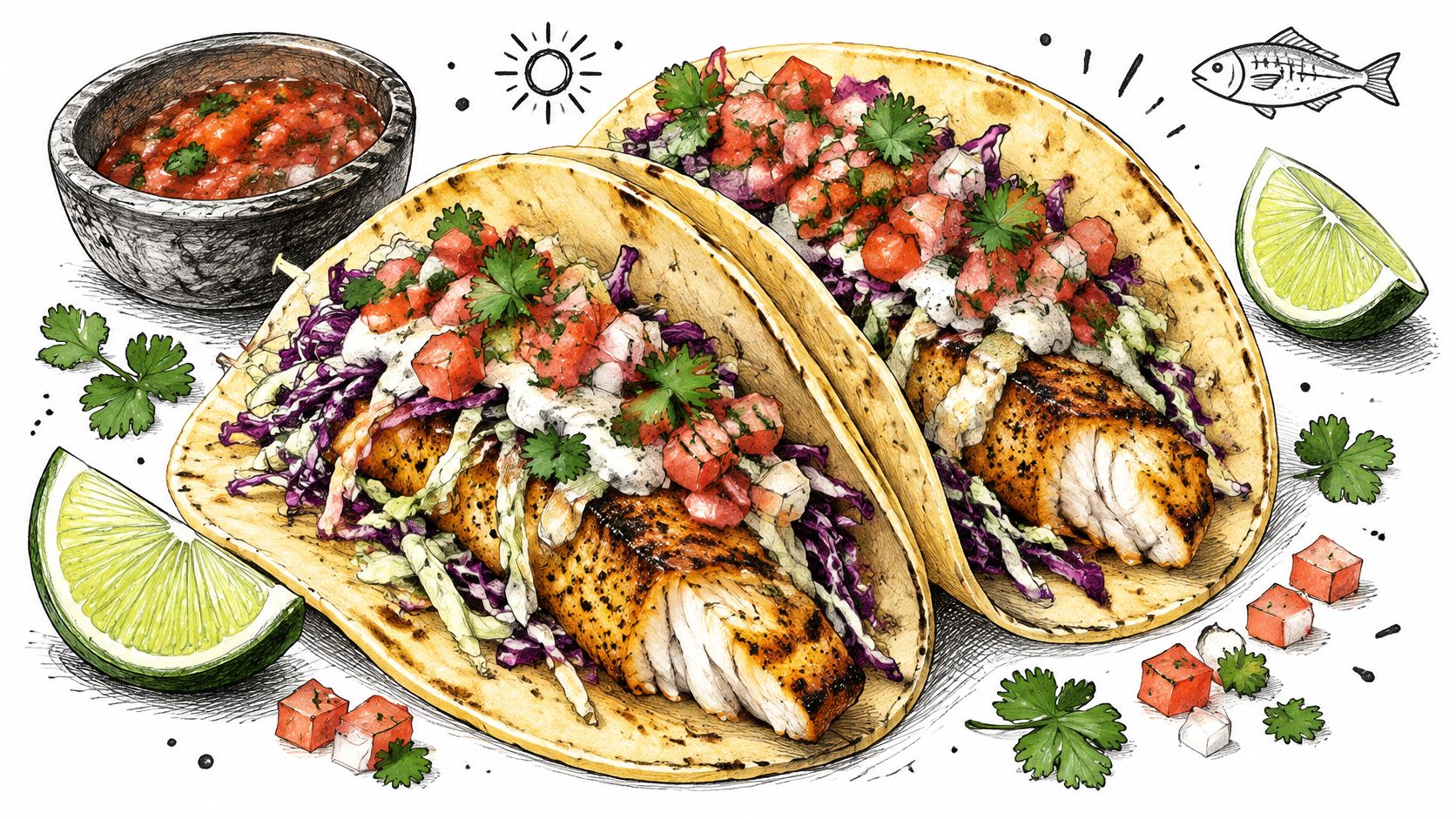
Start here if the menu is new to you. Grilled white fish or shrimp on small corn tortillas, with cabbage, pico de gallo, onion, cilantro, and lime, is light, filling, and hard to ruin. You get lean protein, crunch, and acidity without a battered coating soaking up oil.
Baja-style tacos are the common test. Baja often means battered and fried with a creamy sauce, even when the fish itself is fresh. At a casual taqueria, ask if they can do the same fish a la plancha. If they can't, shrimp a la plancha is usually the safer swap.
How to order it
Say this: "Two grilled fish tacos on corn, sauce on the side, extra cabbage and pico." It's short, polite, and it moves the calorie decision to you. Start with two tacos, eat slowly, and add a third only if you're still hungry.
- Skip the creamy sauce as the default: Use salsa roja, salsa verde, or pico de gallo instead of chipotle mayo or crema.
- Check the tortilla: Ask for single corn tortillas if the kitchen doubles them, unless the filling is very wet.
- Eat protein first: If the plate comes with rice, don't let rice decide the meal.
There's a reason salsa is such a useful swap. A WebMD Mexican food guide puts salsa at about 5 calories per tablespoon and also recommends grilled fish on a baked corn tortilla as a lower-fat choice. You get heat and salt and freshness for almost nothing.
The weak point is oil on the plancha and sugary slaw if the kitchen dresses it heavily. Ask for little oil and slaw with lime if that's an option. Treat any calorie number for tacos as an estimate, because tortilla size, fish portion, and sauce change fast. If you want a quick comparison before you order, snap the menu and rank the taco section by protein and calories left for the day.
2. Ceviche (Fish or Shrimp Ceviche)
Ceviche is the lightest strong starter on most menus, and it can be a full light meal if the portion is generous. Raw fish or shrimp is cured in lime juice with tomato, onion, cilantro, cucumber, and chile. No frying. No heavy sauce. High protein, low fat, and very fresh when it's done right.
A shrimp ceviche served in a cup with cucumber and tomato is a good lunch if you're saving calories for dinner. A mixto ceviche with mixed seafood works as a shared starter, especially if the rest of the table is ordering heavier plates. You eat well without spending your whole budget before the entrées arrive.
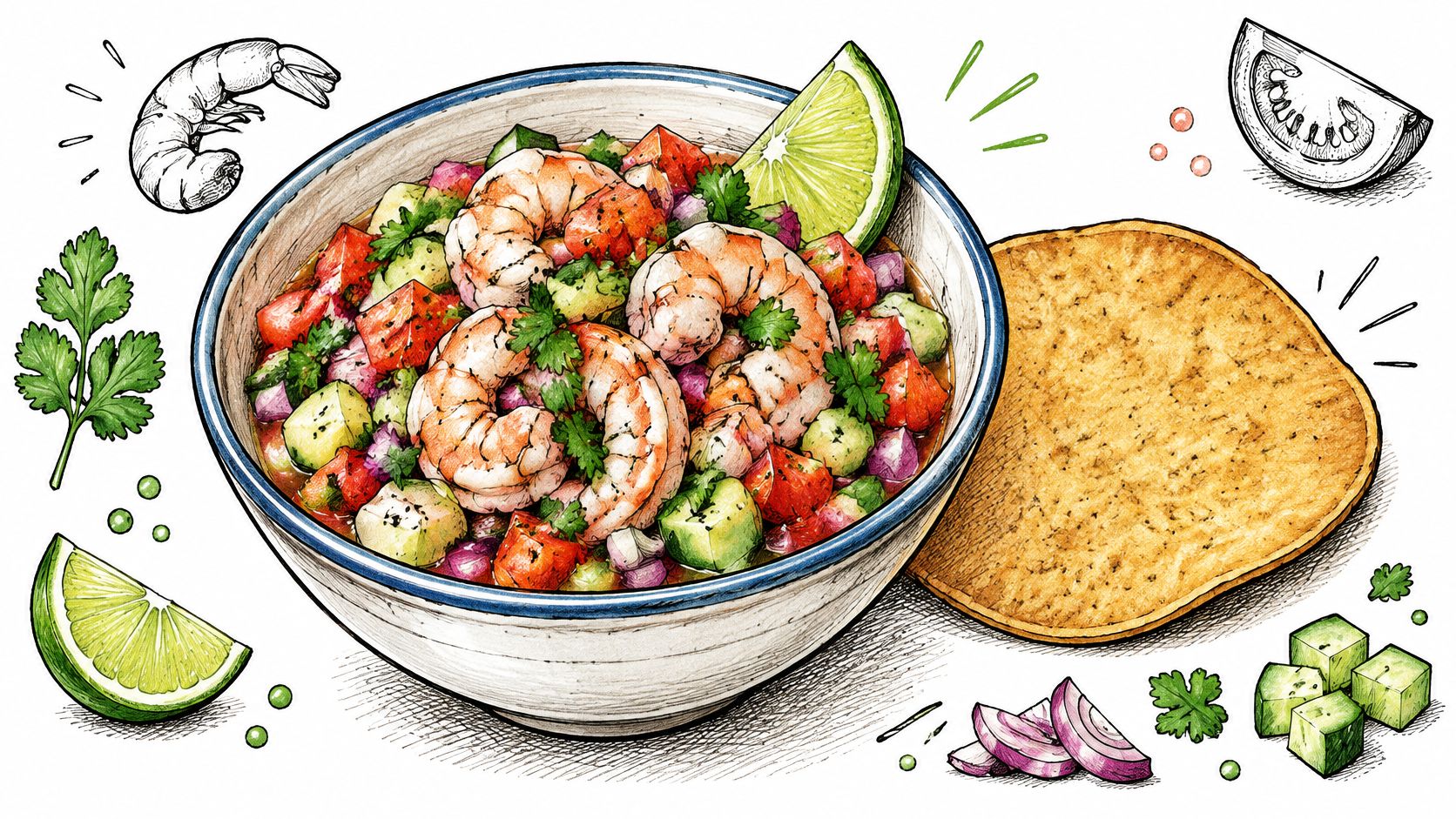
The trap is what comes with it. Fried chips and fried tostadas can turn a lean dish into a chip meal with ceviche on top. Ask for baked tostadas or plain crackers if they have them. If only fried tostadas are available, use one or two for crunch and eat the rest with a spoon. It sounds minor. It matters.
Eat ceviche like a salad first and a dip second. If you're mainly eating the seafood and vegetables, you're ordering it right.
Avocado is a choice, not a mistake. Leave it out if you need the calories lower. Keep a modest portion if you want healthy fats and a more filling plate. Just don't add avocado, chips, and a big entrée and then wonder why the light choice didn't feel light.
Sodium and freshness checks
Ceviche can be salty, especially if the kitchen seasons hard and serves it with salted chips. Ask for less added salt if sodium is a concern, and lean on lime and chile for flavor. Since the seafood isn't cooked with heat, order it only where turnover is high and the fish smells clean and cold. If a place looks quiet and seafood handling seems careless, pick grilled shrimp tacos instead.
3. Chicken Fajitas (Pollo a la Plancha)
Fajitas give you control, which is why they sit near the top of this list. The skillet is mostly grilled chicken, peppers, and onions. The tortillas, cheese, sour cream, rice, and guacamole arrive as separate decisions. That's exactly what you want when you're tracking.
The filling is the lean part. What moves the calorie count is the oil in the pan, the size of the chicken portion, and everything added at the table. A plain chicken-and-pepper skillet eats light. The same skillet wrapped into four flour tortillas with cheese, rice, and guacamole is a different meal entirely. Same order on the menu. Very different plate.
Say this: "Chicken fajitas, corn tortillas, light oil, cheese and sour cream on the side." Then build two tacos max to start, load them with peppers and onions, and use salsa or pico de gallo as your main sauce. Still hungry? Eat the rest of the chicken and vegetables straight from the skillet. You'll get more protein before you get more tortilla.
- Choose corn over flour: Smaller, easier to portion, and you can decide taco by taco.
- Watch the sizzle: A skillet swimming in oil isn't rare. "Light oil, please" is worth saying every time.
- Split the sides: Save half the rice and beans to take home, or swap rice for extra vegetables.
If you're estimating the chicken portion, our guide to the size of an average chicken breast helps you judge whether the skillet is one serving or two. Many fajita plates are built for sharing even when the menu doesn't say so. Box half early. Don't negotiate with a sizzling skillet for twenty minutes.
Working through a long menu? Scanning it with Calorie Genie ranks each dish against your goal and what you have left for the day, so you can see how the fajitas stack up against everything else before you commit.
4. Pollo Tinga Tacos
Pollo tinga is shredded chicken simmered in a smoky tomato and chipotle sauce with onions, a traditional Puebla-style preparation. It's sauced, not fried. You get big flavor without breading, cheese, or a heavy cream base. On corn tortillas with onion and cilantro, it's one of the most satisfying protein-first taco orders.
You'll see it two ways. Traditional restaurants serve tinga tacos on corn tortillas, sometimes with a little crema and cheese. Fast-casual places put the same chicken in a bowl with black beans, lettuce, and salsa. Both work. The taco version is easier to portion, and the bowl version is easier to load with vegetables.
Where tinga goes wrong
Crema is the usual issue. A drizzle looks harmless, but kitchens rarely drizzle lightly. Ask for crema on the side, or skip it and use salsa verde for the same brightness with less fat. If you're watching fat closely, ask whether the chicken is cooked with oil or lard. Most kitchens will tell you straight.
Tortilla choice carries a sodium angle too. Corn tortillas are usually lower in sodium than flour ones, and the FDA sodium in your diet guide recommends asking for no added salt and sauces on the side when you eat out. Tinga already carries plenty of flavor, so you won't miss the extras.
Say this: "Two tinga tacos on corn, crema on the side, extra onion and cilantro." Add a side salad or vegetables instead of extra rice. If you want to see how each topping moves the total, our breakdown of chicken taco calories runs the numbers. Tinga also travels better than most taco fillings. There's no fried shell to go soggy, so it's a solid pick when you're ordering ahead or carrying out.
5. Pozole (Red or Green, with Lean Pork or Chicken)
Pozole doesn't look like diet food, which is part of its appeal. It's a brothy hominy stew with pork or chicken, served with shredded cabbage, radish, onion, lime, oregano, and chile. The bowl is big, hot, and filling. Hominy adds fiber and complex carbohydrates, while the fresh garnishes add volume for very few calories.
Order pozole rojo with chicken if you want the leanest common version. Pozole verde with lean pork can also fit well. The choice that matters most is the cut of meat. Fatty pork and extra oil on top push the bowl in a different direction. Chicken or lean pork keeps it balanced.
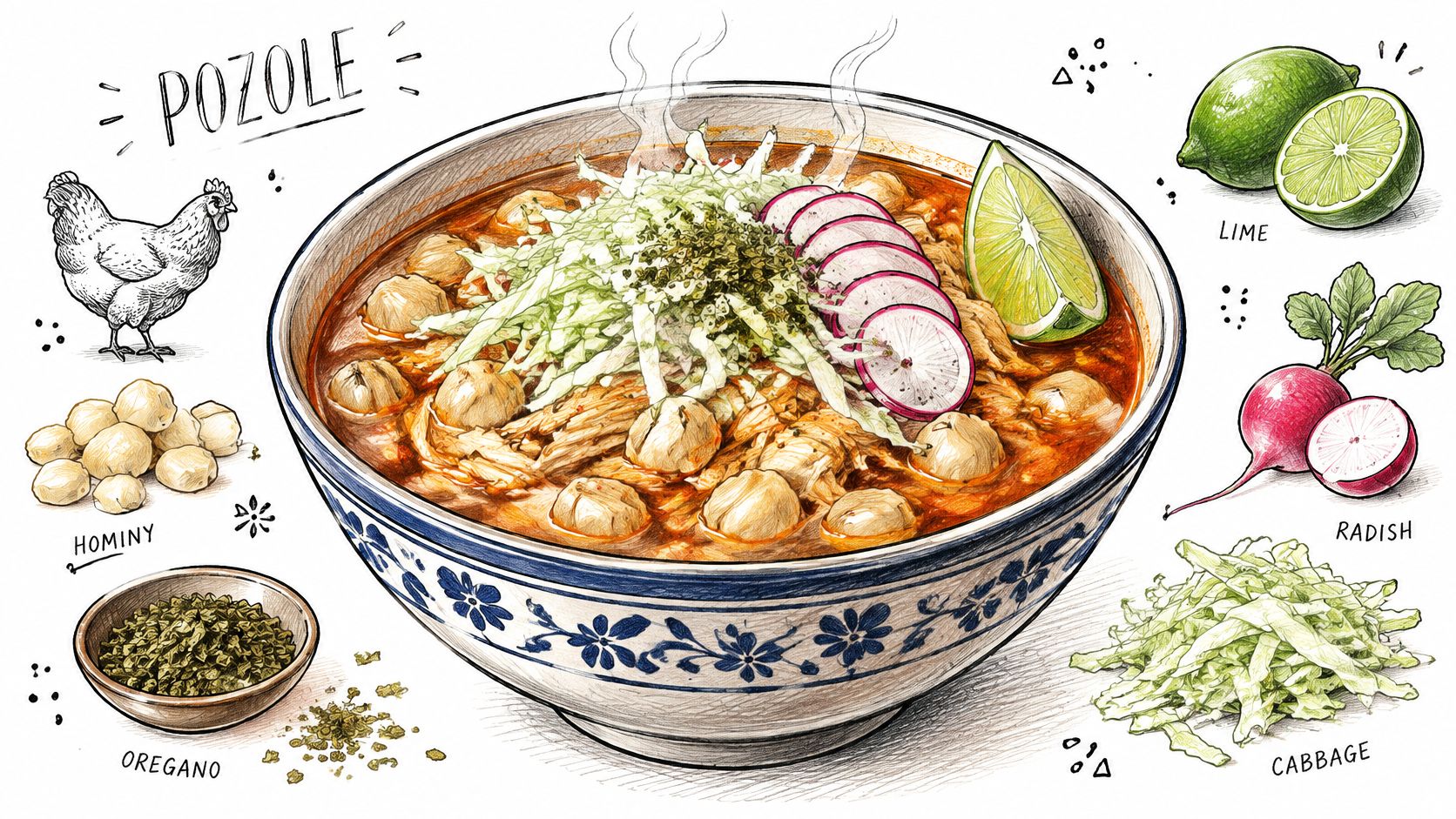
Load the garnishes like you mean it. Cabbage, radish, onion, and lime aren't decoration. They slow you down, add crunch, and make the broth taste brighter without more salt. Eat pozole as the main meal. You don't need tortillas and rice with it.
Practical rule: If the garnish plate is still full when the broth is gone, you ordered pozole but you didn't use the healthiest part of it.
The sodium check
Broth is where sodium hides. The FDA sodium reference lists the sodium Daily Value as 2,300 mg per day, defines 5% Daily Value or less as low, and 20% or more as high per serving. That doesn't mean skip pozole. It means don't add salt before tasting, go easy on salted tostadas, and don't pair it with processed meats and multiple salty sides.
Skip or limit fried tostadas served for crumbling on top. One adds crunch. Three add a second course. If you're sodium-conscious that day, eat most of the meat, hominy, and garnishes and leave some broth behind. You'll still get the flavor and most of the nutrition.
6. Caldo de Pollo (Chicken Soup with Vegetables)
Caldo de pollo is the quiet winner on family-style menus. It's a clear chicken soup loaded with chayote, carrots, zucchini, cabbage, and corn on the cob. You get a large bowl, plenty of vegetables, and lean protein in a form that fills you up without much fat. If you want comfort food that doesn't wreck the day, this is it.
Neighborhood fondas often serve the best version because the vegetables are chunky and the broth tastes like actual chicken, not just salt. The rice usually comes on the side or gets spooned in at the table. That's useful. You can add a little rice for substance or leave it out if you're counting carbohydrates.
Eat the vegetables and chicken first. It's a simple sequencing trick, but it works because the bowl is front-loaded with the most filling, least calorie-dense parts. Squeeze in lime. Add cilantro, onion, and salsa. You'll need less salt than you think.
- Ask for skinless chicken if possible: Or remove the skin at the table before you start.
- Control the rice: Ask for rice on the side and add a few spoonfuls, not the whole portion.
- Skim the top: If the broth looks oily, let it settle and spoon off the visible fat.
Restaurant sodium deserves respect here too. A CDC food-service guidelines page reports dine-in restaurant food averaged 2,090 milligrams of sodium per 1,000 calories, and it uses a practical benchmark of no more than 800 milligrams of sodium for a complete meal. A brothy soup can clear calories easily and still run high on sodium. Taste first, season second.
If you make soup at home between restaurant meals, our guide to calories in homemade vegetable soup gives a useful baseline for how broth, vegetables, and added starch change the bowl. At a restaurant, caldo is also a smart order when everyone else wants combo plates. You won't feel like you're eating separately. You're just eating the bowl that happens to be built better.
7. Ensalada de Nopales (Cactus Salad)
Ensalada de nopales won't carry a meal by itself unless you add protein. As a starter or side, though, it's excellent. Diced cooked nopal cactus pads are mixed with tomato, onion, cilantro, and chile, then dressed with lime. The flavor is tangy and slightly tart, a little like green beans crossed with okra. Low in calories and a good source of fiber, it's volume you want.
Traditional restaurants serve it as a side with tacos or grilled meats. Taquerias sometimes add queso fresco on top and sell it as a starter. Both versions work if you control the cheese. Ask for no cheese or cheese on the side, then add a crumble yourself if you want it.
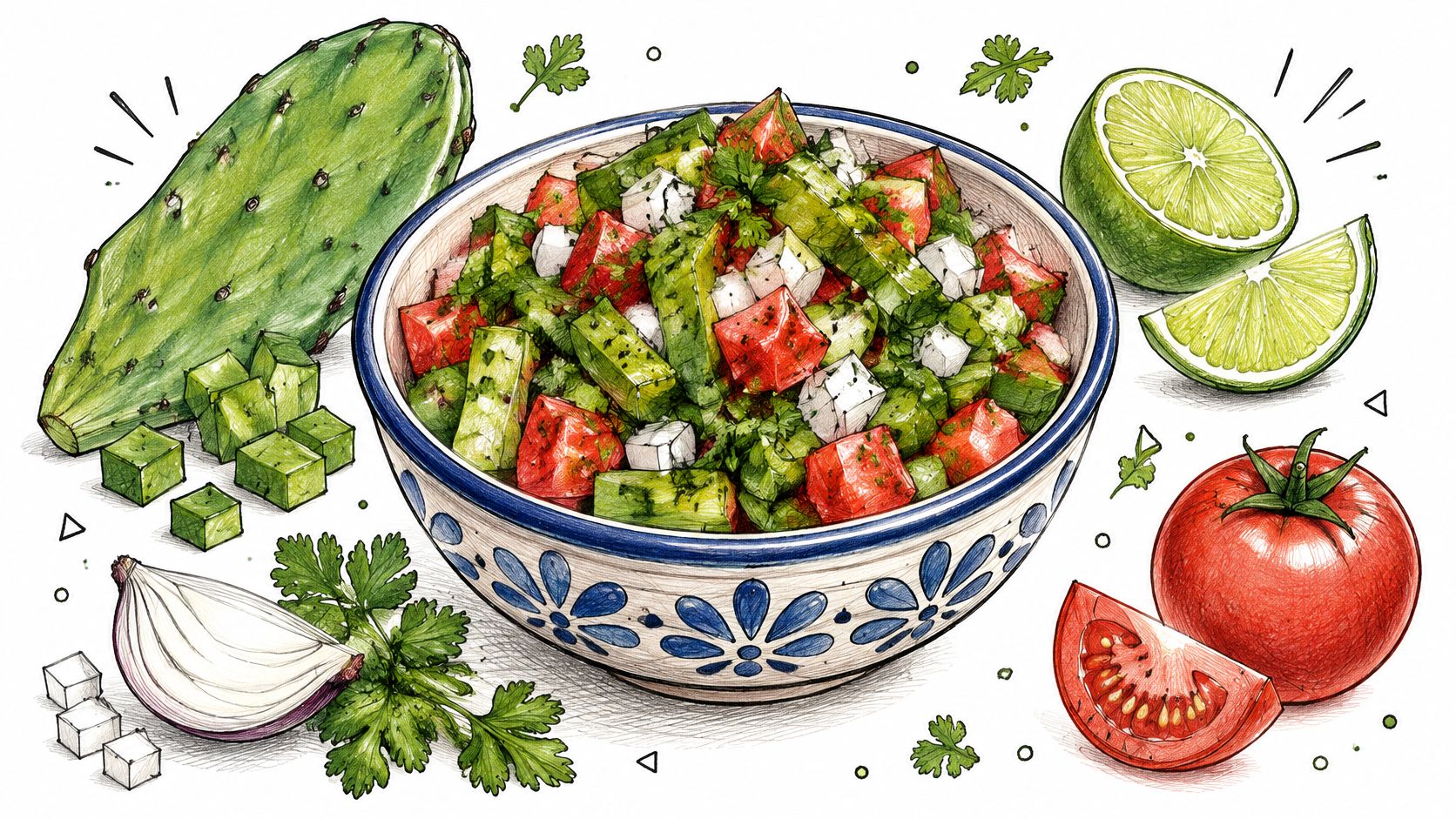
Use it strategically. Order nopales as your starter while the table works through chips. You'll eat, you'll have flavor, and you won't arrive at your entrée already full of fried corn. Any leftover salad makes a great taco topping. It gives you acidity and crunch in the spot where crema would normally go.
How to build a full plate around it
Pair nopales with grilled chicken, fish, shrimp, or lean steak and a small portion of beans. That's a complete plate with protein, fiber, and vegetables, and it doesn't feel like a compromise. Say this: "Nopales salad to start, cheese on the side, then grilled chicken with vegetables." Clean and easy.
The only real cautions are texture and expectations. Nopales can be slightly slippery if they're overcooked or not rinsed well. If you're trying them for the first time, order a side portion, not a giant salad as your whole lunch. If you like them, you've found one of the best low-effort ways to make any Mexican order more vegetable-forward.
8. Chicken or Veggie Burrito Bowl (No Fried Tortilla)
A burrito bowl is the most customizable option on a fast-casual menu, which makes it both the best and the easiest to mess up. Done right, it's grilled chicken or sautéed vegetables, black beans, fajita vegetables, salsa, and lettuce with a modest amount of rice. Done carelessly, it's a burrito without the tortilla but with double cheese, queso, sour cream, chips, and a giant scoop of guacamole.
Chipotle is the obvious example, but local fast-casual spots usually give you even more control. You can ask for half rice and double vegetables without any fuss. That one sentence changes the bowl more than debating brown rice versus white rice.
The ordering pattern is consistent with the American Heart Association professional eating-out guidance, which advises grilled, baked, broiled, steamed, or poached entrées, soft corn tortillas over flour when you do use tortillas, limiting cheese and refried beans, and looking for fresh seafood. In bowl terms, that means grilled protein, plain beans, vegetables, and salsa before anything creamy.
Say this: "Chicken bowl, half rice, double fajita veg, black beans, pico and salsa verde, cheese on the side, no sour cream." If you want guacamole, ask for a measured side portion instead of letting the scoop decide. Add it by spoonful.
If a visual walkthrough helps before your next order, watch this short guide to building a lighter bowl and noticing where extras stack up.
For tracking, remember the variables that move the total. Protein type, cooked portion, oil, rice amount, beans, cheese, sour cream, guacamole, and chips on the side. Two bowls with the same menu name can land far apart. Log the components you ate, not just the name. If you ate half the rice or shared the chips, say so in your log. That correction is more useful than a false exact number.
How the 8 healthier Mexican restaurant picks compare
| Item | Main Protein | Base or Carb Choice | Best Swap | Watch Out For |
|---|---|---|---|---|
| Grilled Fish or Shrimp Tacos (Pescado or Camarones a la Plancha) | Grilled fish or shrimp | Corn tortillas | Choose grilled, use salsa instead of creamy sauce | Fried or battered fish; creamy sauces |
| Ceviche (Fish or Shrimp Ceviche) | Fish or shrimp | Tostadas or crackers on the side | Choose baked tostadas instead of fried chips | Seafood freshness, high sodium, fried sides |
| Chicken Fajitas (Pollo a la Plancha) | Grilled chicken | Corn or flour tortillas; often served with rice and beans | Choose corn tortillas and salsa instead of sour cream or extra cheese | Added oil, large portions of rice and beans |
| Pollo Tinga Tacos | Shredded chicken | Corn tortillas | Skip crema; add onion and cilantro | Fatty chicken, extra oil, high-sodium sauce |
| Pozole (Red or Green, with Lean Pork or Chicken) | Lean pork or chicken | Hominy | Choose lean meat and load up on vegetable garnishes | Fatty pork, salty broth, fried tostadas |
| Caldo de Pollo (Chicken Soup with Vegetables) | Chicken | Vegetables and corn; rice often served on the side | Choose skinless chicken and limit or skip rice | Salty broth, fatty chicken, extra rice |
| Ensalada de Nopales (Cactus Salad) | No main protein | Nopales and vegetables; no substantial carb base | Pair with grilled protein; ask for cheese on the side | Not a complete meal on its own; added cheese or oily dressing |
| Chicken or Veggie Burrito Bowl (No Fried Tortilla) | Chicken, tofu, or black beans | Rice, beans, and vegetables; no tortilla | Choose half rice and double vegetables | Large rice portions, guacamole, cheese, or sour cream |
Order Smarter Next Time Your Healthy Mexican Game Plan
You don't need a different restaurant. You need a repeatable order. Pick a protein-first base, build around vegetables and plain beans, and put sauces and toppings on the side. That covers tacos, fajitas, bowls, soups, and salads without turning dinner into a project.
Start with cooking method. Grilled, broiled, baked, steamed, or poached beats fried almost every time. A grilled fish taco and a battered fish taco share a name and not much else. The same goes for a chicken fajita skillet and a chimichanga. If the menu language is vague, ask one question. "Is that grilled or fried?" You'll get an answer in two seconds.
Then control the stack. Cheese, sour cream, crema, queso, and chipotle mayo aren't banned. They're just rarely served in the portion you'd choose. Ask for them on the side and add by tablespoon. Use salsa, pico de gallo, lime, cilantro, onion, and chile as your default flavor. They're bright, salty, and fresh. They make a lean plate taste finished instead of stripped down.
Your best order is the one you can repeat on a busy Tuesday without a long negotiation with the menu.
Watch the extras that don't feel like part of the meal. Chips before the entrée, a second basket, seasoned rice, refried beans, and shared guacamole all count. That matters because posted numbers aren't perfect. A USDA research summary on restaurant calories found laboratory-measured calories averaged 18% higher than restaurant website figures across 29 quick-service and sit-down foods, and when complimentary side dishes were included, provided energy averaged 245% of the entrée amount. Don't treat that as a reason to panic. Treat it as a reason to log ranges and pay attention to sides.
Sodium needs its own check. A bowl can be strong on protein and vegetables and still be salty from seasoned rice, cheese, sauces, canned beans, and chips. Ask for no extra salt where that's realistic. Choose fresh salsa over heavily salted queso. If you've had a salty lunch, broth-heavy pozole or caldo may not be your best dinner even though both are solid dishes. Context beats a rigid ranking.
A simple order you can say anywhere
Use this structure when the menu is unfamiliar. "Grilled chicken or fish, corn tortillas, extra vegetables, plain black beans if you have them, salsa on the side, no cheese or sour cream on the plate." You can adapt it to tacos, fajitas, or a bowl. It's clear. Kitchens hear versions of it every day.
Before you order, scan the menu with Calorie Genie to rank dishes against your goal and the calories you have left. You can sort by best for you, healthiest, or lowest calorie, then log what you chose. If the plate arrives bigger or oilier than expected, adjust the ingredient portions before saving. That's more honest than pretending a restaurant meal is exact.
Treat every number in this guide as an estimate and a helpful guide, not medical advice. Portions vary by kitchen, cook, and day. Your job isn't to hit a perfect number at a Mexican restaurant. Your job is to stack the obvious wins. Grilled protein. Vegetables in real quantity. Corn tortillas you chose on purpose. Beans that aren't buried in fat. Sauces you control. Do that consistently and Mexican food stops being a calorie mystery. It becomes one of the easier cuisines to order well.
Next time you're staring at a long Mexican menu, photograph it with Calorie Genie AI and let it rank every dish against your goal and the calories you have left that day. You can sort by healthiest or lowest calorie, then snap your plate to log calories, protein, carbs, and fat in seconds. Download it free on iOS and Android and try it on your next taco order.