
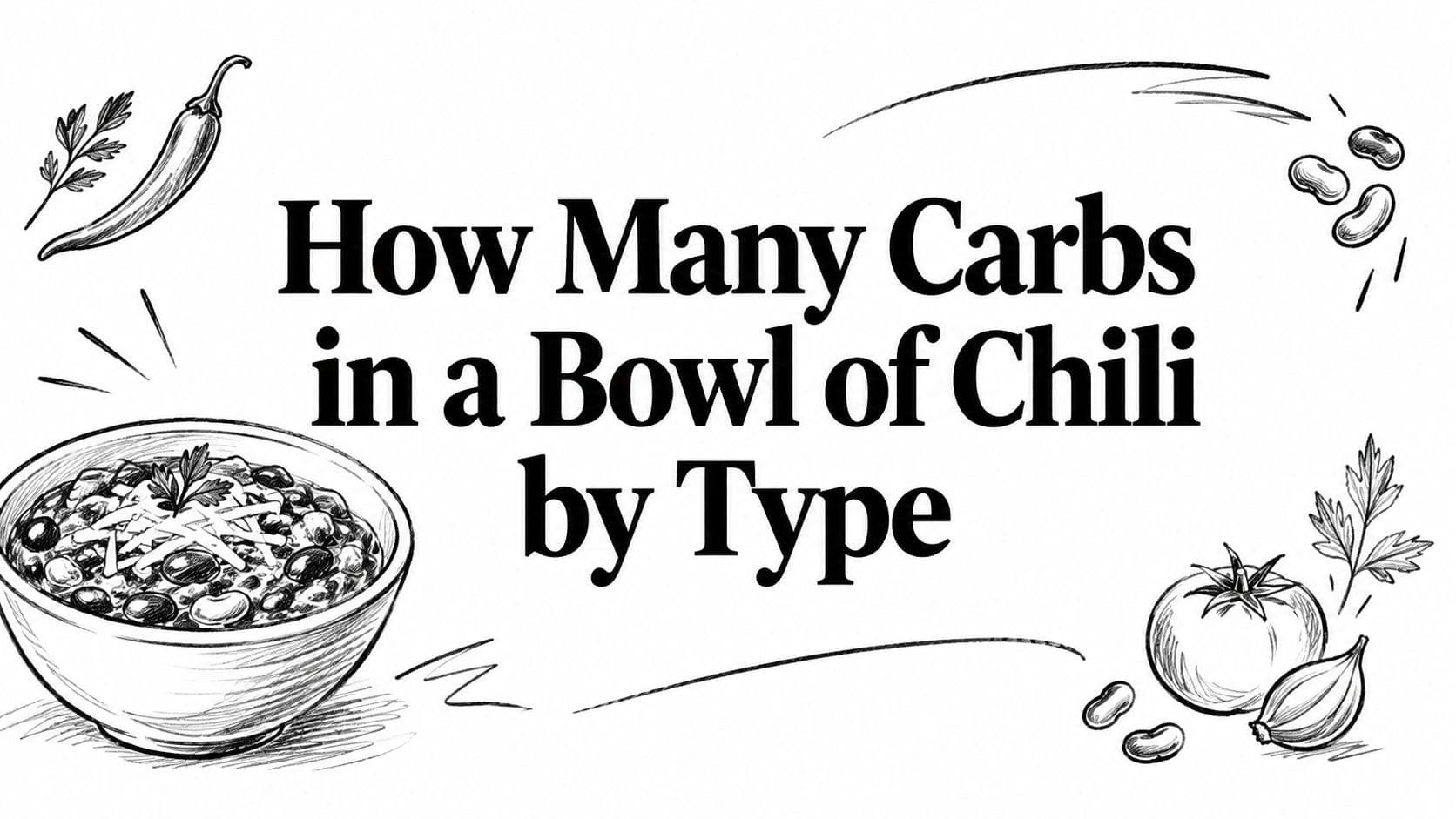
A 1-cup serving of canned chili with beans lands near 34 grams of total carbohydrate and about 26 grams of net carbohydrate. Meat-forward or school-style bowls can land nearer 16 to 22 grams per cup.
Nobody ladles the same pot twice. One bowl is a measured cup from a can. Another is a heaped restaurant ladle over rice, with crackers on the side. Beans, tomatoes, a spoon of sugar, or a flour thickener move the count before you add a single topping. The useful answer is a portion-by-recipe range, then a short correction for beans, fiber, and sides.
Table of Contents
- A Realistic Carb Range for One Bowl
- Carb Counts for Common Chili Bowls
- What Actually Adds the Carbs
- Total Carbs Fiber and Net Carbs
- Restaurant Vegetarian and Loaded Bowls
- Adjust and Log the Bowl You Ate
A Realistic Carb Range for One Bowl
Start with that 34-gram cup, then refuse to treat it as the only truth. The same style of chili, scaled to a heaped 1.5-cup bowl, climbs toward roughly 51 grams of total carbohydrate and about 39 grams net. Calories, protein, and fat ride along with that cup, near 260 calories, 16 grams of protein, and 10 grams of fat, but those numbers describe one dense commercial recipe, not every simmering pot.
A standardized school recipe shows how far the other direction goes. Chili con carne with beans from USDA school-foodservice data lists 8 grams of total carbohydrate and 3 grams of dietary fiber in a half-cup serving, with 107 calories and 13 grams of protein. Double that ladle to a full cup and you are near 16 grams of carbohydrate and 6 grams of fiber. A 1.5-cup school bowl is closer to 24 grams of carbohydrate and 9 grams of fiber.
That gap is the whole lesson. A bowl has no legal size. Homemade meat-to-bean ratios swing with whoever is cooking. Packaged chili can hide sugar or a flour-based thickener that a meat-and-chile pot never uses. The same problem shows up in other one-pot meals, including homemade vegetable soup, where the ladle looks identical and the solids underneath are not.
Practical rule: Decide whether your pot was bean-heavy or meat-heavy before you trust any single database line.
The lookup below separates canned, school-style, meat-forward, and veggie bowls by measured cups. After that, the carb sources, the fiber math, the plate around the bowl, and a photo-log correction each get their own pass.
Carb Counts for Common Chili Bowls
Treat this table like a size chart. Pick the closest row, because averaging two sizes fits nobody.
| Chili type | Portion | Total carbs | Fiber | Net carbs |
|---|---|---|---|---|
| Canned chili with beans | 1 cup (256 g) | 34 g | 8 g | 26 g |
| Canned chili with beans | 1.5 cups | 51 g | 12 g | 39 g |
| Canned chili with beans | 2 cups | 68 g | 16 g | 52 g |
| School chili con carne with beans | 1/2 cup | 8 g | 3 g | 5 g |
| School chili con carne with beans | 1 cup | 16 g | 6 g | 10 g |
| School chili con carne with beans | 1.5 cups | 24 g | 9 g | 15 g |
| Meat-forward chili con carne | 1 cup | 22 g | low | near 22 g |
| Veggie pumpkin chili | 2 cups | 35 g | a few grams | below 35 g |
Canned chili with beans
USDA-linked nutrition data for canned chili with beans lists a 256-gram cup at 33.9 grams of carbohydrate, including 8 grams of dietary fiber, with carbohydrate at about 12% of the Daily Value. That serving is about 260 calories, 16 grams of protein, and 10 grams of fat. Subtract the fiber and the net estimate lands near 26 grams.
Scaling stays linear because it is the same recipe. A 1.5-cup bowl comes to roughly 51 grams total and 39 grams net, and two cups reach 68 grams total with 52 grams net. Each extra half cup adds about 17 grams of carbohydrate, so you can size up or down by the ladle. Reach for these rows when the chili is thick, bean-heavy, and close to what comes out of a supermarket can.
School-style, meat-forward, and veggie bowls
The school half cup is the lean row: 8 grams total and 3 grams fiber, about 5 grams net, plus 107 calories and 13 grams of protein. A full cup doubles that to 16 grams total, and a 1.5-cup bowl reaches 24 grams. Choose this family when the pot is looser, meatier, and lighter on beans.
Meat-forward chili con carne sits near 22 grams of carbohydrate per cup when beans are few or absent, with most of that coming from chile, tomato, sauce, or a thickener. That recipe line lists no fiber figure, so its net carbs stay near the total.
A 2-cup veggie-packed pumpkin chili logged 35 grams of carbohydrate. Use that row for a vegetable pot, not for a doubled can of bean chili.
Mixed bowls sit between rows. A meaty base with one scoop of beans lands between the meat and school lines, so pick the row on the side that matches what filled most of the ladle. Before you log, write down three things: the style, the cups, and whether beans went into the pot.
What Actually Adds the Carbs
Meat is mostly protein and fat. The carbohydrate sits in the bean and tomato fraction.
Two bowls can look identical in a photo. Both reddish, both glossy with oil, both hiding their solids under chili sauce. One was built on a can of kidney beans and crushed tomato. The other is Texas-style, mostly beef and dried chile, with beans left out on purpose. They will not log the same way.
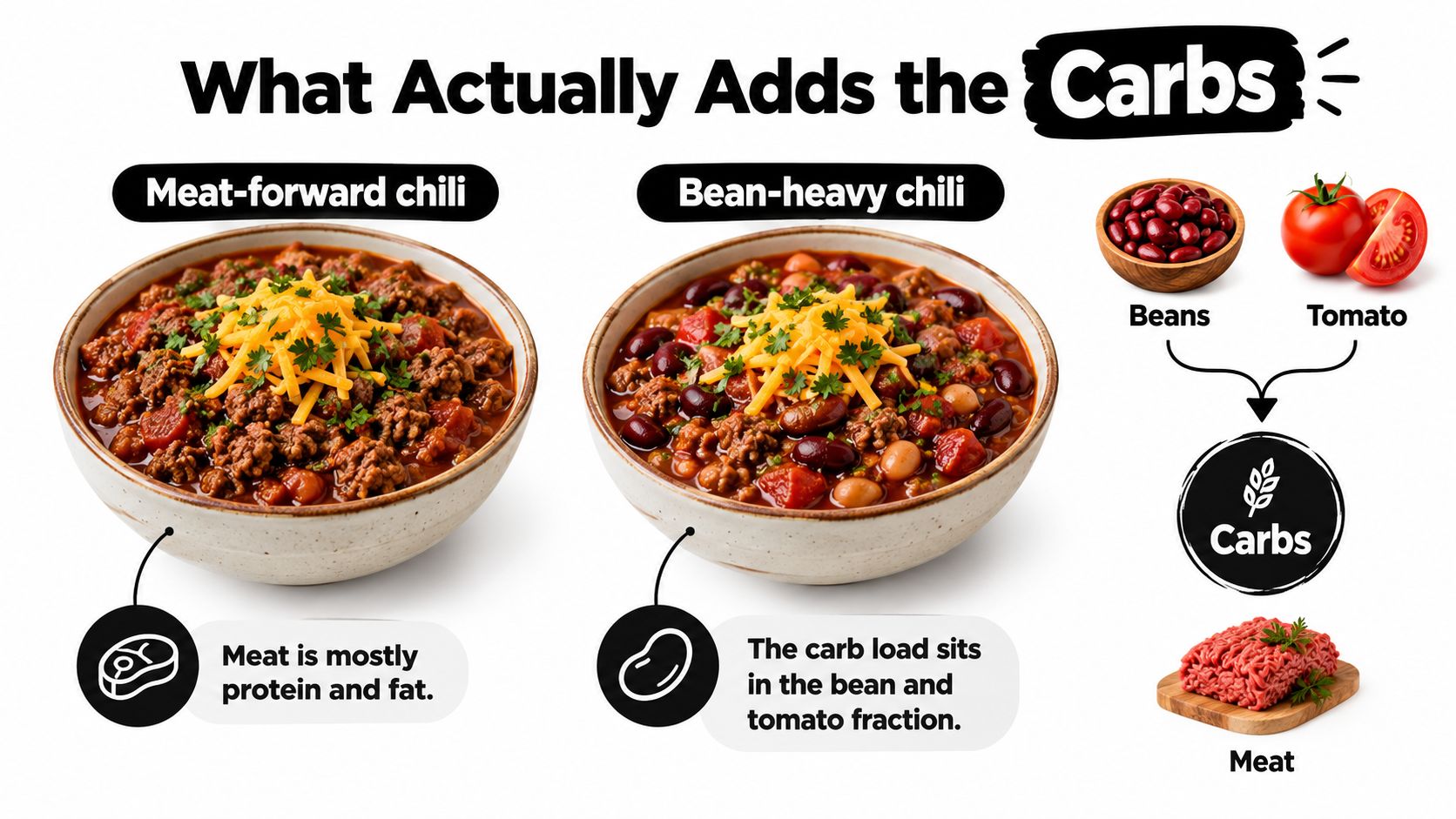
Legume research describes beans as sources of complex, slowly digestible and resistant carbohydrates, with fiber that shifts by species and by how the beans were cooked. Beans also bring starch and oligosaccharides. That is why a bean-heavy cup can meet or pass the canned benchmark near 34 g of carbohydrate, while a meat-forward cup with few or no beans lands noticeably lower, as the chart rows above show.
Fiber is counted inside the total on a label and is not fully digested, so a bean-rich serving can also show a lower net number than its total suggests. The next section walks through that arithmetic.
Small add-ins that still move the log
Texas tradition leans meat and chile and often skips beans. Plenty of American family pots add beans and tomatoes, which is why two cousins can argue over the same recipe name.
Smaller ingredients still change a diary entry:
- Sweetened canned tomatoes: The sugar is already in the can, so the pot tastes like chili, not dessert, and the carbs are real.
- Beer, corn, or a spoon of sugar: Each one adds digestible carbohydrate without looking like a side dish.
- Flour or another starch: A thickener disappears into the sauce and raises the count the way starch does on plates where you can see it, like a serving of jasmine rice.
Chili behaves like any stew. The ladle looks the same either way, and the solids under the surface decide the carbs.
A quick ingredient check settles most of the guesswork before logging: how many beans went in, how much tomato or sauce is in the bowl, and whether a thickener or sweetener was used. Cheese, sour cream, corn, and tortilla chips belong on their own lines, not inside the chili number.
Total Carbs Fiber and Net Carbs
On a Nutrition Facts panel, dietary fiber is part of total carbohydrate and is also listed on its own line. FDA guidance on dietary fiber states that fiber is a type of carbohydrate that isn't easily digested in the small intestine. A bean chili can therefore post a solid total and still carry meaningful fiber. A meat-only bowl is often low in both.
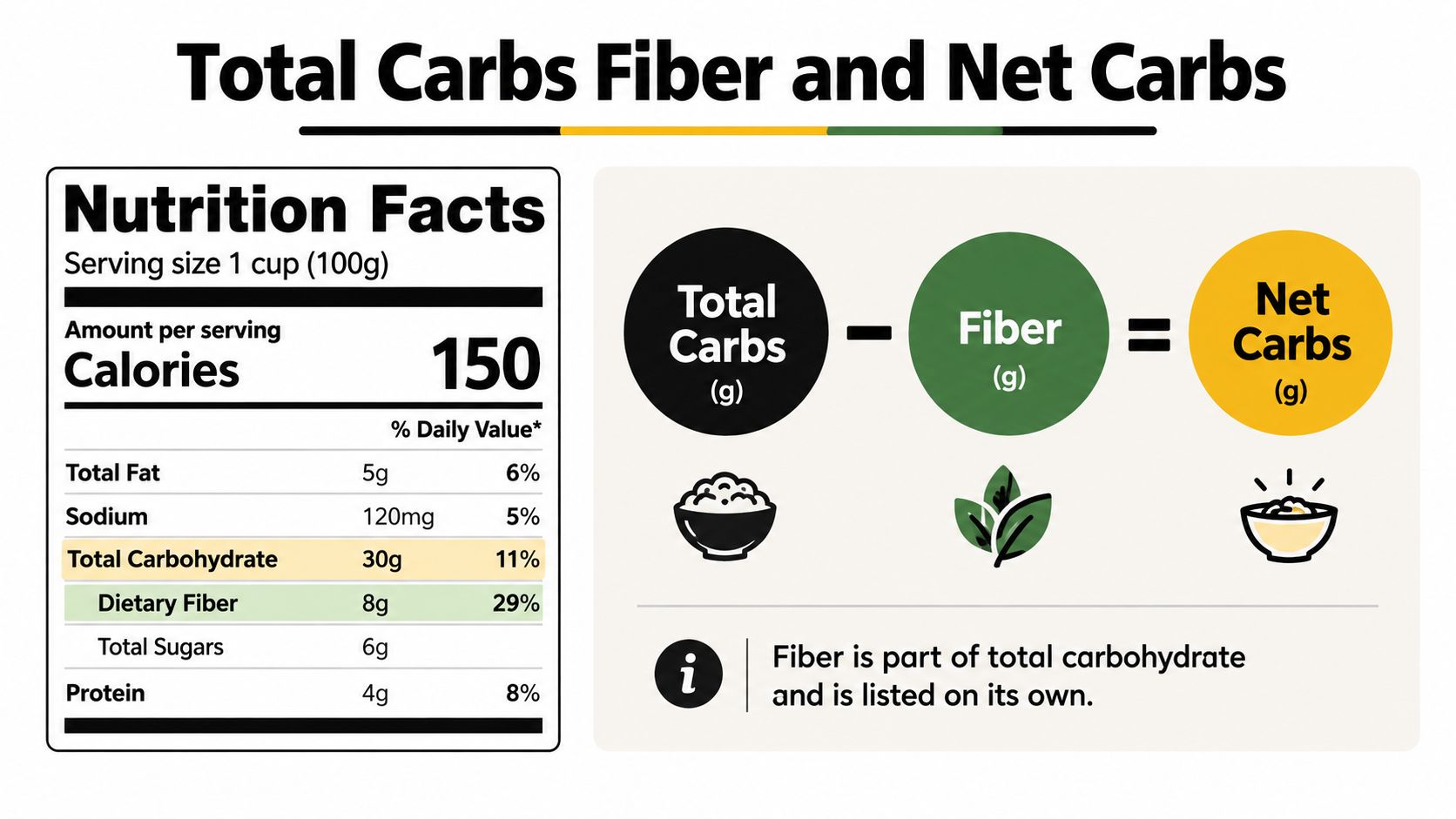
One cup of label math
Use the canned cup as the only worked example. About 34 grams of total carbohydrate minus about 8 grams of fiber leaves about 26 grams if you subtract fiber. That is the whole trick. It is arithmetic, not a blood test.
The label's total is the full carbohydrate line, and fiber is the part to read beside it.
Net carb isn't a standardized FDA number. Subtracting fiber doesn't make two recipes metabolically identical, especially when bean quantity, added sugar, starches, or portion size differ. A bean bowl and a meat bowl can share a color and still feed you differently.
What this does not promise
Nobody can promise a blood-glucose response from a bowl of chili, and no bowl here is automatically diabetes-safe or keto. A bean bowl may fit some lower-carbohydrate plans only after the portion is controlled. Added sugar and starch thickeners raise the digestible part without adding the same fiber. Sweetened tomatoes and flour are the usual hiding places.
Rice, cornbread, tortilla chips, and sugary toppings can dominate the meal even when the chili itself looks moderate. If you are setting daily targets, pair this label reading with a plain look at macros for weight loss so the chili number has a place to land.
Log total carbs and fiber together. Treat any net figure as a personal estimate, not a medical target.
Restaurant Vegetarian and Loaded Bowls
The pot is only half the plate. A label serving is a typical amount people eat, not a recommended portion, and a restaurant ladle often runs closer to 1.5 or 2 cups than to one neat cup. Use the larger chart rows for that ladle.
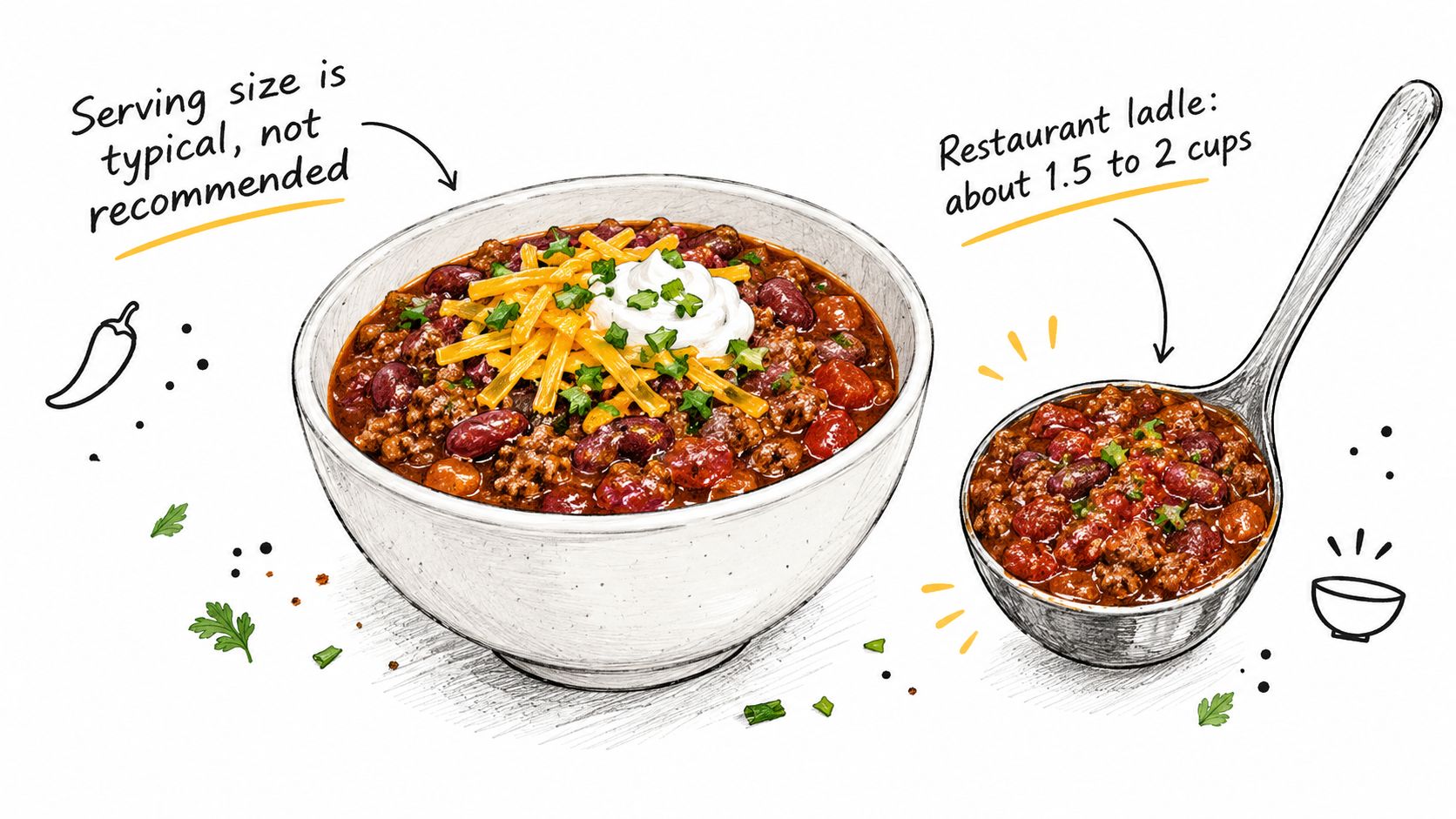
A 1.5-cup ladle of canned chili with beans is already about 51 grams of total carbohydrate and 39 grams net before rice, chips, or cornbread arrive. That is the chili alone.
Vegetarian isn't a free pass
Leaving out beef doesn't automatically lower carbohydrate. According to Lose It, a 2-cup serving of veggie-packed pumpkin chili contained 35 g of carbohydrates in 2025. Many meatless recipes replace the beef with extra beans, lentils, corn, or pumpkin, and some stir in a little maple syrup. Keep that chili on its own chart row. Don't fold the queso, tortilla chips, or the rice underneath into the same cell.
What to log beside the chili
The sides are often the larger carb risk:
- Rice, pasta, potatoes, cornbread, crackers, and tortilla chips can outweigh the chili. Log each one as its own food.
- Cheese and sour cream add mostly fat and very little carbohydrate. They still belong in the diary if you track calories.
- Corn and sweet toppings add carbohydrate on top of whatever the pot already held.
The question left after the chart isn't "how many carbs in a bowl of chili" as a generic search. It's how many carbs were in this exact serving, including the food under the bowl and the food on top of it.
Adjust and Log the Bowl You Ate
A single database line can't answer a pot you cooked. FDA label guidance puts it plainly: a serving size is the amount people typically eat, not a recommended portion. Chili still changes with kidney, pinto, or black beans, with tomatoes, corn, beer, sugar, or flour, and with rice, pasta, potatoes, or crackers beside it.
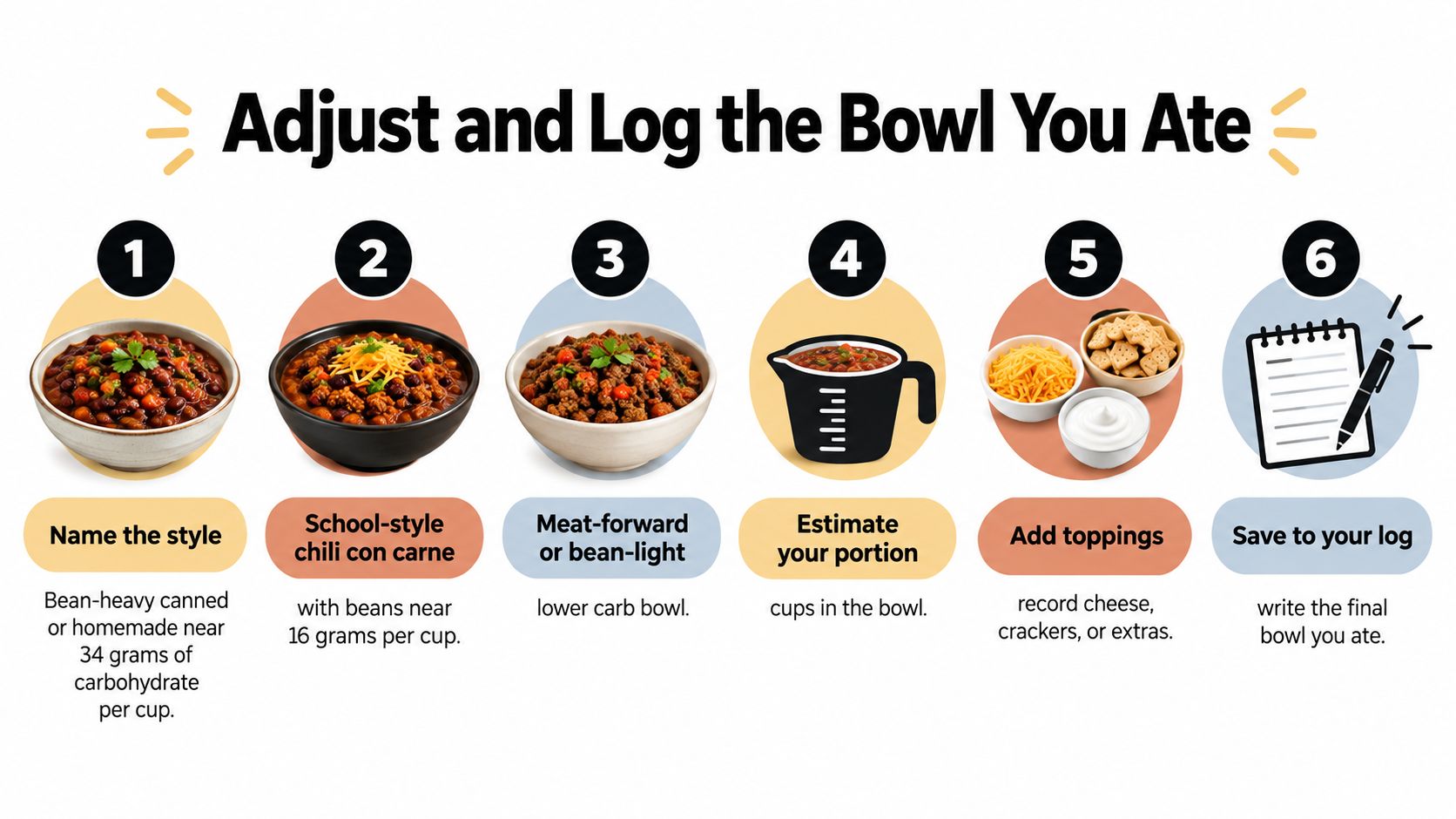
Six moves, then save the pot
- Name the style. Bean-heavy canned or homemade chili sits near 34 grams of carbohydrate per cup. School-style chili con carne with beans sits near 16 grams per cup. Meat-forward or beanless Texas-style sits near 22 grams per cup. Vegetarian gets its own row, because extra beans or corn can replace the meat.
- Measure the ladle. Use 1 cup, 1.5 cups, or 2 cups. If you didn't measure, compare the bowl to a known mug. A label serving isn't a target you are supposed to hit.
- Start from the matching chart row for total carbohydrate and fiber. Don't blend a school recipe with a canned one.
- Nudge for what you saw in the pot. A thick bean layer moves toward the canned 34-gram cup. Mostly meat and chile moves toward 22 grams per cup or lower. Sweetened tomatoes, beer, corn, sugar, or flour push digestible carbs up without a matching pile of fiber.
- Add the plate around the bowl as separate items. Rice, cornbread, crackers, and tortilla chips are not "chili." Cheese can stay with the bowl if you only need a rough carb total, but it still changes calories and fat.
- Correct the photo if that is all you have. A picture can't see beans under the surface or count the cups. One photo of a plate gives calories, protein, carbs, and fat for the whole plate, plus a 1 to 10 health score with a one-line reason, and every ingredient is editable. Tell the log "two cups," "extra beans," "no beans," "served over rice," or "cooked with a flour thickener."
Save the corrected ingredient list so the next bowl from the same pot doesn't start from zero.
These remain food-diary estimates, not lab values and not medical advice. A corrected photo can show calories, protein, carbs, and fat together, which is more useful than one unexplained carb number copied from a can.
Calorie Genie AI reads a photo of the bowl you ate and returns calories, protein, carbs, and fat you can edit when the beans, the ladle, or the rice were off. That correction path is built for chili, where one canned figure never matches every pot. Visit Calorie Genie AI and log the next bowl with the style, the cups, and the sides named.