
Plain cooked jasmine rice is about 130 calories per 100 grams, or about 205 calories for a 158-gram cooked cup. These figures are practical estimates for rice cooked in water without added oil or butter.
You've spooned rice into your bowl, opened your calorie app, and searched for a matching entry. Several results appear, and they don't agree. Before choosing the number that looks familiar, check whether the entry describes the rice before or after cooking.
Table of Contents
- Why Jasmine Rice Calories Are Easy to Misread
- Calories per 100 Grams of Cooked Jasmine Rice
- How Cooked and Dry Cups Change the Calorie Count
- Typical Jasmine Rice Portions You Can Picture
- Choosing How to Log Jasmine Rice in Your App
- Why Cooling Rice Does Not Make It Low Calorie
- Putting Jasmine Rice Calories to Work in Your Plan
Why Jasmine Rice Calories Are Easy to Misread
You type “one cup of jasmine rice” into your food diary. The app returns a number, but there's no obvious clue about whether that cup means dry grains from the bag or cooked rice from your saucepan.
That missing detail matters more than the neatness of the entry's name. A result labeled “jasmine rice” can still be the wrong match if its measurement state doesn't match your meal. Conversely, a clearly labeled cooked long-grain entry may be a useful reference even when it doesn't name your exact brand.
What your food log needs to know
Think of the food entry as a description, not just a calorie total. Before saving it, check these details:
- Cooked or dry: Did you measure the grains before cooking or weigh the finished rice?
- Weight or volume: Did you use a kitchen scale, a measuring cup, or a visual guess?
- Plain or prepared: Was the rice cooked only in water, or did someone add oil, butter, coconut milk, or sauce?
Those details explain why bowls that look similar can deserve different entries. Your bowl might contain plain steamed rice. Another might contain rice prepared with fat, packed more tightly, or served in a deeper dish.
Rice also deserves this attention because it's an everyday staple, not an occasional garnish. FAO's historical overview of rice consumption reports that nearly 90% of global rice production and consumption occurs in Asia and describes rice as a staple for roughly 2.4 billion Asians. For people who eat rice regularly, a repeatable logging method is more useful than memorizing an isolated calorie figure.
Practical rule: Choose the entry that matches what you measured, not simply the entry with the most familiar food name.
You don't need to treat each bowl as a laboratory sample. You just need enough information to avoid a mismatch.
If you're holding a finished meal, start with cooked portions. If you're preparing a batch, a dry-weight recipe method can also work. Either approach is reasonable when the measurement and nutrition reference describe the same state.
Calories per 100 Grams of Cooked Jasmine Rice
The practical baseline is about 130 calories per 100 grams cooked, with a 158-gram cooked cup providing about 205 calories. The same cup contains roughly 44.5 grams of carbohydrate, 4.3 grams of protein, 0.4 grams of fat, and 0.6 grams of fiber, using the plain cooked jasmine rice nutrition reference.
The measured portion below illustrates the basis for that estimate.
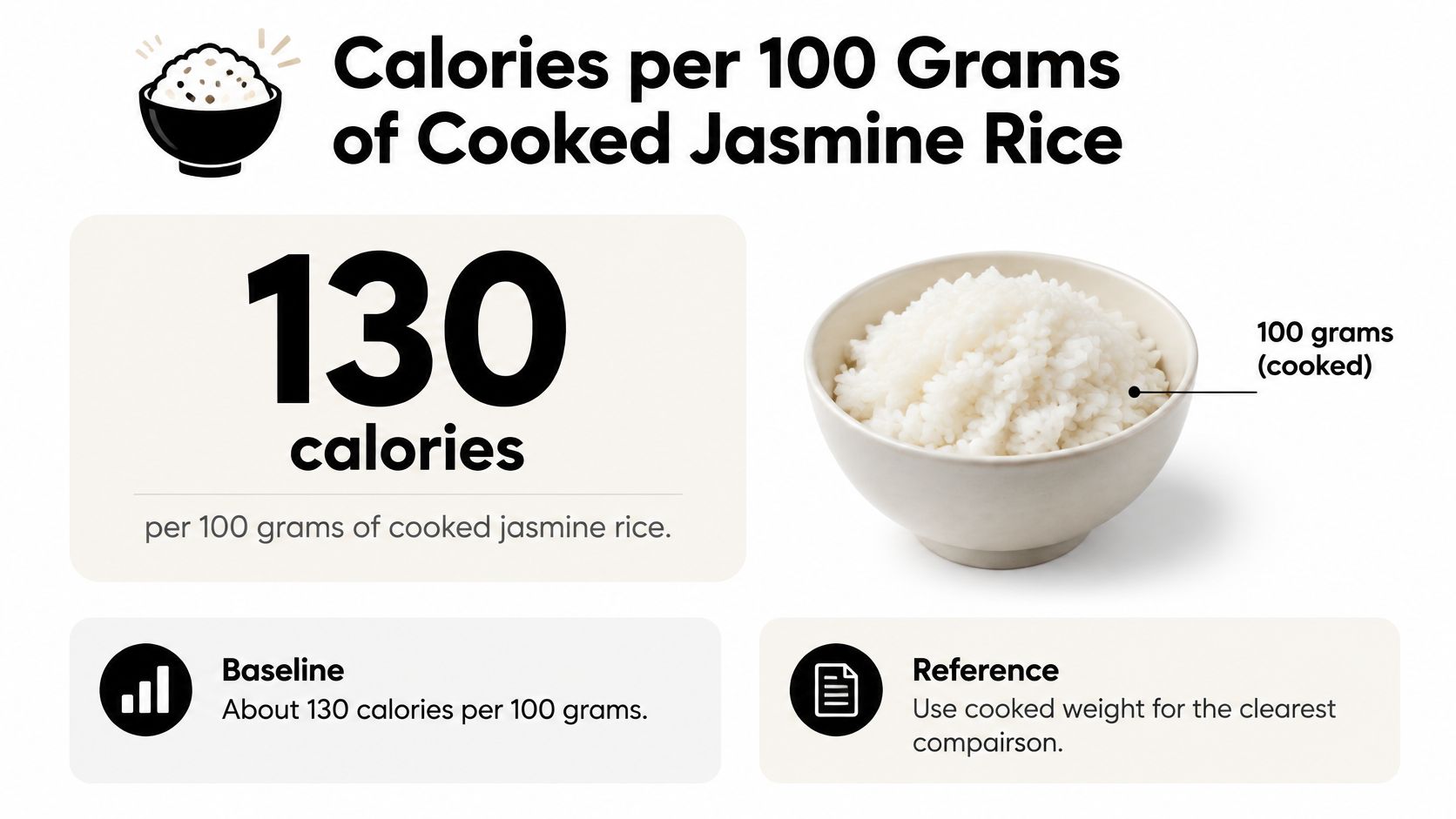
What the baseline describes
That reference applies to rice cooked in water, without calorie-containing additions. It doesn't describe fried rice, rice simmered in coconut milk, or rice finished with butter.
Carbohydrate accounts for most of the energy in the reference portion. The protein and fat figures are much smaller. Keep that distinction in mind when reviewing an app's result: the rice entry describes the rice, not the chicken, tofu, vegetables, or dressing beside it.
A useful way to read any nutrition entry is to pair its number with its basis:
| What you're checking | What the entry should clarify |
|---|---|
| Food identity | Plain white jasmine rice or an appropriate long-grain comparison |
| Preparation | Cooked in water or prepared with other ingredients |
| Measurement | Cooked grams, dry grams, or a clearly defined cup |
| Nutrition total | The amount corresponding to the portion you actually entered |
Why the reference isn't an exact promise
Jasmine rice is an aromatic long-grain rice. Standardized tracking references commonly use cooked long-grain white rice as the closest comparison rather than assuming every jasmine cultivar has an identical composition.
That's a useful starting point, not a guarantee about every bag or bowl. Brand, cultivar, water absorption, and preparation can change the calorie density of the finished rice. A softer, wetter batch and a firmer batch don't necessarily contain the same amount of grain in an equal cooked weight.
The practical takeaway is simple: confirm that a per-gram entry means cooked grams before using it for cooked rice. Then check whether the preparation matches.
Don't choose extra decimal places just because an app allows them. A carefully matched estimate is more useful than a highly specific number attached to the wrong food state.
How Cooked and Dry Cups Change the Calorie Count
A measuring cup tells you volume. It doesn't tell you whether that volume contains dry grains or cooked rice.
That's the trap behind many confusing jasmine rice calories results. During plain cooking, rice absorbs water. The water increases the finished weight and volume without adding meaningful energy, so the original grain's calories become distributed through a heavier cooked portion.
Cooked and Dry Jasmine Rice Calories by Basis
The following are approximate long-grain white rice benchmarks used for comparison, not exact values for every jasmine product. The dry-versus-cooked rice comparison gives the weights and calorie estimates below and shows why an unspecified cup can create a difference of roughly 470 calories in a food log.
| Basis | Typical Weight | Calories per Cup | Calories per 100 g |
|---|---|---|---|
| Cooked long-grain reference | About 158 g per cup | About 205 | About 130 |
| Dry long-grain reference | About 185 g per cup | About 675 | About 365 |
These rows describe different quantities of grain. They are not a before-and-after comparison showing what happens when the same batch is boiled.
If you cook a measured amount of dry rice in plain water, its calories don't disappear. You end up with more cooked mass because the rice has taken up water. A cup scooped from that finished batch is therefore not equivalent to a cup measured straight from the bag.
Choose a consistent batch method
If you weigh the dry rice before cooking, use a dry-rice entry. For a shared batch, record the recipe and divide it according to the share you eat.
If you weigh your portion after cooking, use a cooked-rice entry. Don't apply a dry-food calorie density to the finished portion just because that's the information printed most prominently on the bag.
The same recipe-versus-serving distinction matters with mixed dishes. A guide to calories in homemade vegetable soup can help you think about a whole pot separately from what goes into your bowl.
A cup is a useful kitchen measure. It isn't a complete food-log description until you add “cooked” or “dry.”
Even cooked cups remain approximate. Loosely spooned rice and firmly packed rice can occupy the same measuring cup while weighing differently. When a scale is available, cooked weight removes that particular source of guesswork.
Typical Jasmine Rice Portions You Can Picture
Your usual bowl can become a helpful visual reference, but first you need to know what it holds. “A small bowl” doesn't describe a standard portion, and a shallow plate can make rice look more spread out than a deep dish does.
Instead of borrowing someone else's idea of a serving, weigh a portion in the dish you use. Notice how high the rice sits and how much of the plate it covers. That gives you a personal reference for meals when weighing isn't practical.
The illustration below shows how portions can look different as the serving grows.
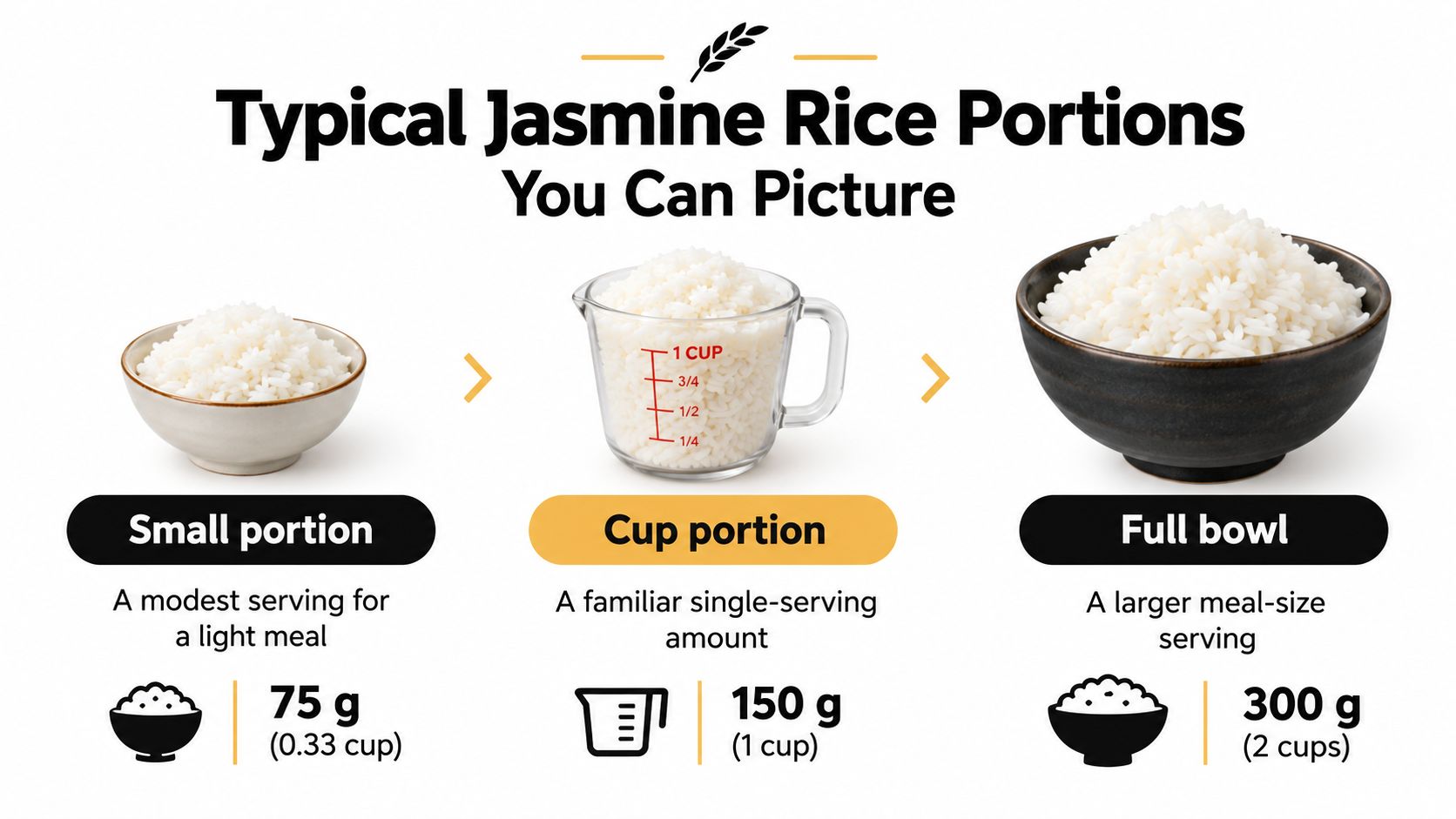
A practical portion ladder
Using the same plain cooked reference, 79 grams is about 103 calories and 118.5 grams is about 154 calories, according to the cooked jasmine rice portion guide. That guide also explains why brand, cultivar, water uptake, and preparation can shift the weight associated with a nominal cup.
For larger portions, the nutrition reference cited earlier puts a 200-gram serving at about 260 calories and a 300-gram serving at about 390 calories. These are estimates from the same baseline, not separate measurements of every possible bowl.
| Portion description | How to use it |
|---|---|
| Smaller side portion | Compare it with a measured amount in your usual dish |
| Familiar cup-sized portion | Use the cooked-cup reference established earlier |
| Larger meal bowl | Check the weight rather than assuming the bowl is a serving |
| Packaged serving | Follow the matching product label and preparation basis |
When the package differs
The earlier nutrition reference also reports a 200-gram jasmine rice package listing 310 calories, equivalent to 155 calories per 100 grams. That doesn't mean the plain reference is automatically wrong. It means a specific product can differ.
Possible reasons include its formulation, cooking method, water absorption, fortification, or added ingredients. Check the label rather than forcing a branded product into a generic entry.
For plain homemade rice, weigh the cooked portion when possible. If you add oil or butter, record it separately or include it in the saved recipe. The portion ladder helps you recognize size, but the preparation still needs its own description.
Choosing How to Log Jasmine Rice in Your App
The right logging method depends on what information you have. At home, you may know the cooked weight and recipe. At a restaurant, you may only have the meal in front of you.
This image reflects the choice between weighing, measuring, and using a photo estimate.
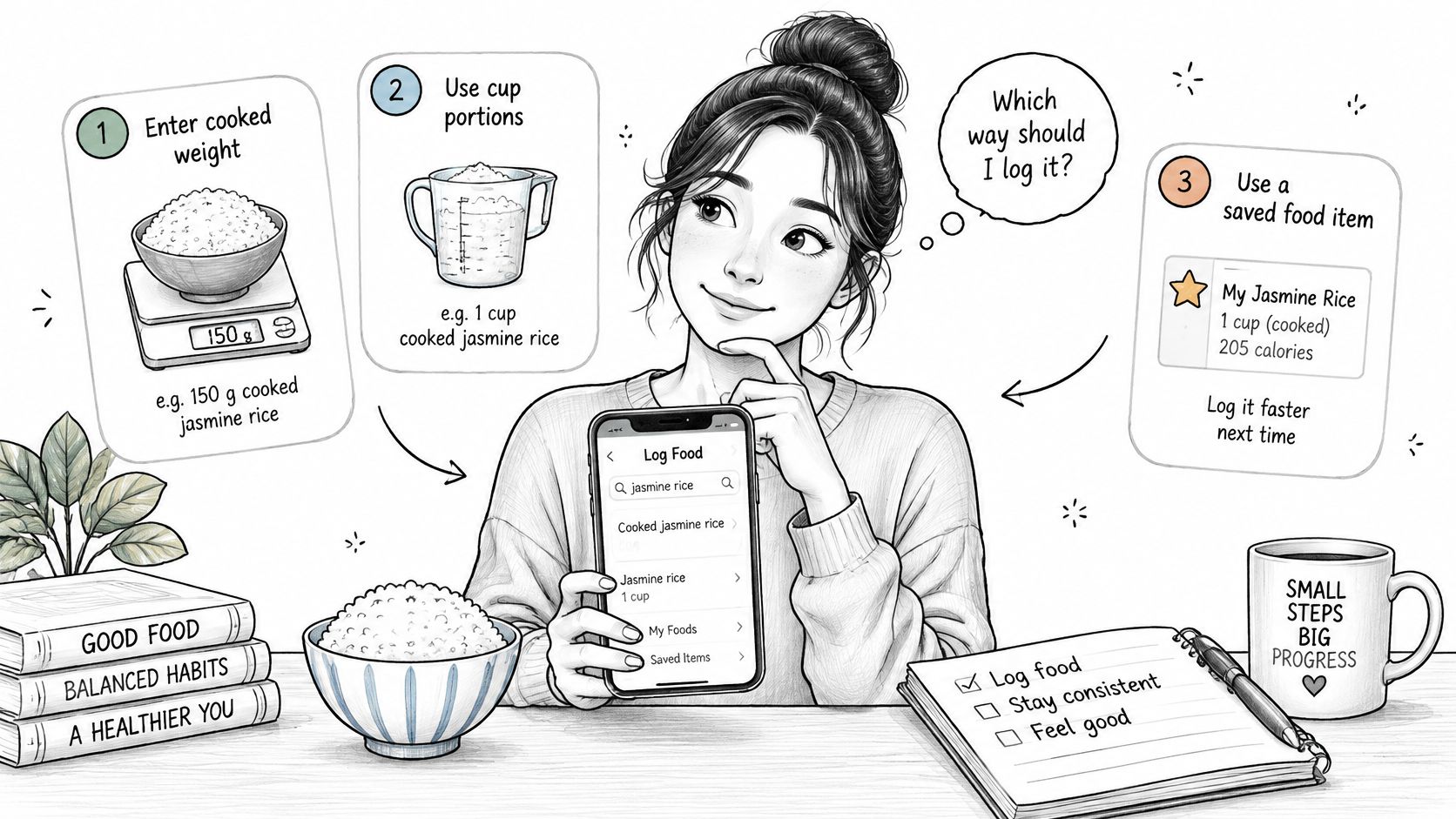
Database lookup versus manual weighing
A generic database lookup can work when you find an entry that clearly states its preparation and measurement basis. Search for cooked jasmine rice, inspect the entry, and enter the amount you ate. Don't assume the first result is the closest match.
Weighing cooked rice and recording additions gives you a more concrete portion description. Put the empty dish on the scale, tare it, then add the rice. Choose a cooked entry and account for cooking fats without counting them again if they're already included in a recipe.
Neither method requires you to make the log look perfect. The important work is matching the entry to the meal.
Photo logging with an editable estimate
Calorie Genie is another option. It identifies foods in a meal photo, estimates portions, and lists ingredients for review. You can adjust a portion, edit an ingredient or macro by hand, or describe a correction in plain language.
For rice, useful corrections include:
- Clarify the state: Tell the app that the portion is cooked, not dry.
- Name the added fat: Say “cooked in olive oil” if that matches the preparation.
- Replace the visual guess: Enter your measured cooked weight when you have it.
- Review the whole plate: Check that the rice, protein, sauce, and vegetables appear as appropriate ingredients.
A photo result is an editable estimate, not a scale reading. The image may show the size of the mound, but you still need to clarify hidden ingredients or correct a portion that looks wrong.
This video introduces the app workflow.
For a rice-and-chicken meal, review each component rather than accepting the total without inspection. The guide to chicken thigh calories is a useful companion when that's the protein on your plate.
A practical routine is to capture the meal, check the rice state, correct the portion, and review additions before saving. Use measured information where you have it and acknowledge uncertainty where you don't.
Why Cooling Rice Does Not Make It Low Calorie
You may have seen the claim that refrigerating rice and reheating it makes it substantially lower in calories. There's a real food-science idea behind that claim, but the calorie conclusion goes further than the evidence supports.
Cooling cooked rice can increase resistant starch. That may affect digestibility and glucose response. It doesn't justify treating the same bowl as a low-calorie food or deleting part of its logged energy.
What the study actually found
A pilot study of resistant starch and white-rice responses involved 21 healthy adults and compared four white-rice varieties, including jasmine. It found no significant glycemic-index difference between the high- and low-resistant-starch rice preparations.
In that experiment, refrigerated long-grain rice reached 2.55 grams of resistant starch per 100 grams, compared with 0.20 grams in the lowest-resistant-starch preparation, as reported in the same study. Despite that difference, the researchers didn't find a clear glycemic-index advantage between those rice preparations.
That distinction matters. A change in starch composition isn't automatically evidence of a meaningful calorie reduction, a predictable glucose benefit, or improved appetite control.
Keep energy and glucose response separate
For tracking purposes, separate these questions:
- Energy: What portion and recipe did you eat?
- Preparation: Was it freshly cooked, cooled, or reheated?
- Glucose response: How might your body respond to that meal?
They're related, but they aren't interchangeable. A claim about resistant starch can't substitute for a calorie entry, and this small pilot trial doesn't establish a universal metabolic benefit.
Don't apply a calorie discount just because the rice spent time in the fridge.
Log cooled or reheated rice according to its measured portion or recipe. If you add butter, oil, or sauce during reheating, account for that preparation change rather than assuming the earlier entry still describes the meal.
Individual glucose responses can vary. If glucose management is part of your care, treat calorie logging as a food record, not a prediction of your personal response. A measured portion and an honest description remain useful whether you eat the rice freshly cooked or as leftovers.
Putting Jasmine Rice Calories to Work in Your Plan
You don't need a new calculation every time you eat rice. You need a reliable description that you can reuse and adjust.
Keep the cooked reference as your starting point for plain finished rice. Keep the dry reference for grains measured before cooking. The large difference between those entries is the reason to record the state, not a reason to avoid the food.
Build a repeatable rice entry
Use a short routine that fits your kitchen:
- Measure what's practical: Weigh your cooked portion when you can, especially while learning what your usual bowl holds.
- Describe the preparation: Distinguish plain rice from rice prepared with fat or other ingredients.
- Review before saving: Check the portion and ingredient list, whether you used a database or a photo.
- Keep a reusable record: Save your usual portion as a favorite if your food diary supports it, or keep its weight in a note.
A reusable entry shouldn't become an automatic assumption. If you change the product, use a larger bowl, or prepare the rice differently, update the record. Consistency means using the same sensible method, not forcing every meal into the same number.
Use the estimate in context
The rice entry is part of your meal record, not a judgment about the meal. Consider it alongside the other foods you eat and the targets you've chosen. For a broader view of protein, carbohydrate, and fat planning, use the guide to macros for weight loss.
Practice can make the routine more familiar. You'll learn which dish you usually use, which entry matches your recipe, and which details deserve a correction. You can still log an unfamiliar meal without pretending you know its exact composition.
For your next bowl, make the state explicit, review the portion, and account for additions. That small habit is more useful than chasing an exact calorie total from an ambiguous “serving.”
Download Calorie Genie free on iOS or Android and use its editable food estimates to help log your next jasmine rice meal. AI meal scanning requires a Premium subscription, and you can correct portions or preparation details before saving. Visit Calorie Genie AI to learn about the app and choose your download.