
You've unpacked the takeaway, spooned curry onto your plate, and torn off some naan. Then you open your food diary. Does the curry entry include rice? Is the restaurant tub a serving or something to share? And where does the butter brushed onto the bread belong?
Indian food calories are easier to track when you separate the dish from the whole dinner. A curry, its rice, the bread, and the sides need their own attention. Otherwise, you can log the main dish correctly and still miss much of what you ate.
The harder problem is that the same dish name doesn't describe a fixed recipe. A home cook might use a little cream and a modest ladle of sauce. A restaurant version might arrive with a richer gravy and a much larger serving. Neither appearance nor the menu name tells you the full story.
Practical rule: Treat a dish name as a starting point, not a calorie measurement.
The comparisons below focus on what changes each plate and how to record it accurately. Universal per-serving calorie ranges aren't reliable without a defined recipe and serving weight. Use a package label, a restaurant's published nutrition information, or an ingredient-based estimate where available. For everything else, record the portion, preparation, and accompaniments rather than choosing the lowest-looking entry.
Table of Contents
- 1. Butter Chicken (Murgh Makhani)
- 2. Chicken Tikka Masala
- 3. Chicken Biryani
- 4. Dal Makhani
- 5. Palak Paneer
- 6. Chana Masala (Chole)
- 7. Vegetable Samosa
- 8. Masala Dosa
- 9. Idli with Sambar and Chutney
- 10. Tandoori Chicken
- Estimated Calories for 10 Popular Indian Dishes
- Turn Your Favorite Curry Into a Smarter Order
1. Butter Chicken (Murgh Makhani)
With butter chicken, start by looking at how much gravy you really eat. A plate with mostly chicken and a little sauce isn't the same logging problem as a deep bowl of gravy repeatedly scooped up with naan.
For a takeaway dinner, serve your portion before eating rather than treating the delivery container as the serving unit. Keep rice and bread visible on the plate. If you leave sauce behind, don't record the entire container as eaten.
The Indian Food Composition Tables overview%2034-35.pdf) describes analytically derived information for 528 foods across 151 nutrient components, supporting an ingredient-based approach rather than a universal value for every curry. For practical tracking, the useful distinctions are the ingredient amounts, cooked state, edible weight, and added fat.
Keep the richness, change the portion
You don't have to strip away everything that makes the dish enjoyable. At home, measure the butter and cream before adding them, then record your share of the finished batch.
- Home-cooked plate: Save the actual recipe and adjust the portion you served.
- Restaurant plate: Choose a restaurant-style entry and note uncertainty about cream and butter.
- Accompaniments: Record naan, rice, vegetables, and raita separately.
If butter chicken is the reason you ordered, keep it. A more satisfying compromise may be less bread or a smaller rice portion, rather than replacing the curry with something you didn't want.
2. Chicken Tikka Masala
A supermarket chicken tikka masala and a restaurant takeaway shouldn't automatically share the same diary entry. With the packaged meal, you have a label. With the takeaway, you're estimating a recipe you haven't seen.
Use the most specific information available. Check whether a ready-meal label describes the curry alone or includes rice. Then check whether the nutrition applies to the whole pack or the stated serving.
For restaurant food, don't assume the chicken's grilled appearance describes the finished dish. Your log needs to represent the chicken and the sauce you ate, plus anything served alongside it.
Make the dinner easier to record
Suppose you're ordering tikka masala after work and want both rice and naan. You can have both, but decide what you'll serve before you start eating. A shared rice container and bread torn throughout the meal are harder to reconstruct afterward.
- Photograph the served plate: Include the bread and rice, not just the curry bowl.
- Describe the preparation: Note a creamy sauce rather than selecting plain chicken tikka.
- Adjust for leftovers: Record what you ate, not everything that arrived.
At home, experiment with yogurt and a lighter finishing pour of cream if that suits your recipe. The trade-off is texture and richness. Measure what you use rather than assuming a homemade version is automatically lighter.
3. Chicken Biryani
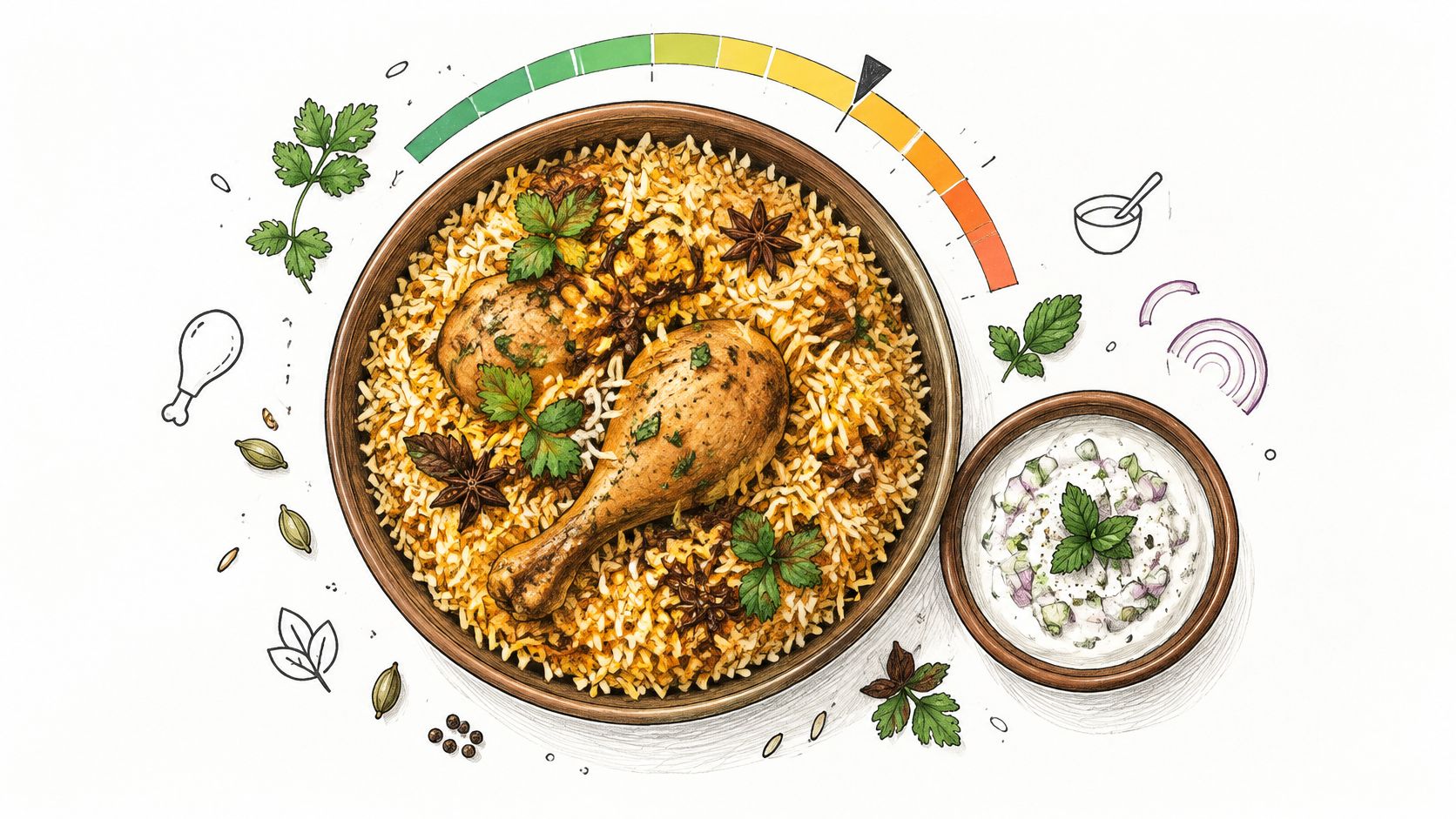
Biryani needs a mixed-dish entry, not a plain-rice shortcut. Logging only the rice misses the rest of the recipe. Logging the whole plate as chicken creates a different mismatch.
The practical challenge is distribution. Your serving may contain more rice, more chicken, or more oily onions than another scoop from the same pot. A photo helps document the plate, but it can't reveal every ingredient beneath the surface.
For a home batch, record the uncooked ingredients, cooking fat, and finished yield. Then allocate the recipe according to the portion you served. Don't enter dry rice nutrition against the weight of cooked biryani.
Separate the rice question from the recipe question
Our guide to jasmine rice calories is useful for understanding rice portions, but a plain-rice entry isn't a substitute for the full biryani recipe.
When ordering, ask whether raita and gravy come separately. Log them separately too. If the biryani already gives you the rice you want, adding bread is a preference, not a necessary part of the meal.
A smaller serving of the biryani you enjoy is often a simpler adjustment than trying to turn a rich restaurant recipe into a different dish.
Choose your meat for preference and the actual preparation. Don't assume swapping the meat alone guarantees a lower-calorie plate.
4. Dal Makhani
The mistake with dal makhani is choosing a plain lentil entry because both dishes contain pulses. That can leave the recipe's finishing ingredients out of your record.
For a home-cooked version, treat the lentils, beans, cooking fat, and finishing ingredients as a recipe. For a restaurant version, select an entry that actually describes dal makhani rather than the leanest generic dal result.
Consistency matters more than finding a reassuring number. If you regularly cook the same batch, use the same recipe record and serving bowl. Change the entry when you change the ingredients or serving size.
Log the bowl and the bread separately
A realistic lunch might be dal makhani, roti, cucumber, and yogurt. A different dinner might involve the same dal alongside naan, rice, and another curry. The dal's name hasn't changed, but the meal has.
- Record the finishing fat: Include butter or cream added after simmering.
- Check the serving: A heaped bowl shouldn't inherit the entry for a smaller ladle.
- Include the sides: Bread, rice, and yogurt belong in the diary too.
At home, add richness gradually and taste before adding more. If you prefer a less creamy version, save that as your own recipe rather than using it to estimate restaurant dal.
You can keep the comforting bowl and adjust the rest of lunch. There's no need to replace it with a thin dal unless that's what you'd rather eat.
5. Palak Paneer
A green gravy doesn't tell you how much paneer or added fat is on the plate. For palak paneer, check the cheese portion before judging the meal by its color.
Imagine serving it from a family dish. Your ladle might collect mostly spinach gravy, while another person gets more paneer cubes. Equal-looking bowls don't necessarily represent equal ingredient shares.
For your own recipe, record the paneer used in the batch, the cooking fat, and any cream. If you add more spinach, update the recipe, but don't assume that extra spinach cancels out the other ingredients.
Balance the meal without deleting the paneer
Reducing paneer may lower the recipe's total energy, but it also changes what the meal provides. If you're tracking nutrition as well as calories, don't make every adjustment by removing the ingredient you rely on for protein.
Our guide to macros for weight loss explains how to look beyond the calorie total when planning a meal.
- Want more vegetable volume? Add spinach or serve vegetables alongside.
- Want less richness? Review added cream and cooking fat before changing everything else.
- Want a clearer log? Record paneer quantity and bread separately.
At a restaurant, describe the dish as served rather than selecting a homemade entry because it looks similar. If the paneer portion is unusually generous, adjust that component instead of assuming the default serving fits.
6. Chana Masala (Chole)
Chana masala is a good example of why the accompaniment deserves its own decision. A bowl served with salad and roti is a different meal from chole served with bhature, even when the chickpea preparation is identical.
If you're making it at home, measure the cooking oil and record the chickpeas in the state you measured them. Don't use the dry weight from a recipe against a serving of cooked chickpeas.
The distinction matters across Indian meals. The ICMR–INDIAB dietary analysis reported that carbohydrates supplied 62.3% of daily energy, while protein supplied 12%, below the 15% share recommended in national dietary guidance. Those population findings don't define your plate, but they're a useful reason to examine meal balance rather than calories alone.
Keep the chole, choose the pairing deliberately
For a quick dinner, canned chickpeas can make the recipe easier to assemble. Use the package information and the amount you add in practice, then include the gravy ingredients and oil.
At a café, decide whether you want the fried bread because you enjoy it. If you do, record it rather than treating it as an invisible accompaniment.
Useful distinction: A dish can fit your calorie budget without making every possible side fit the same meal.
For photo logging, include the whole plate. A close-up of the chole bowl won't document bread sitting outside the frame.
7. Vegetable Samosa
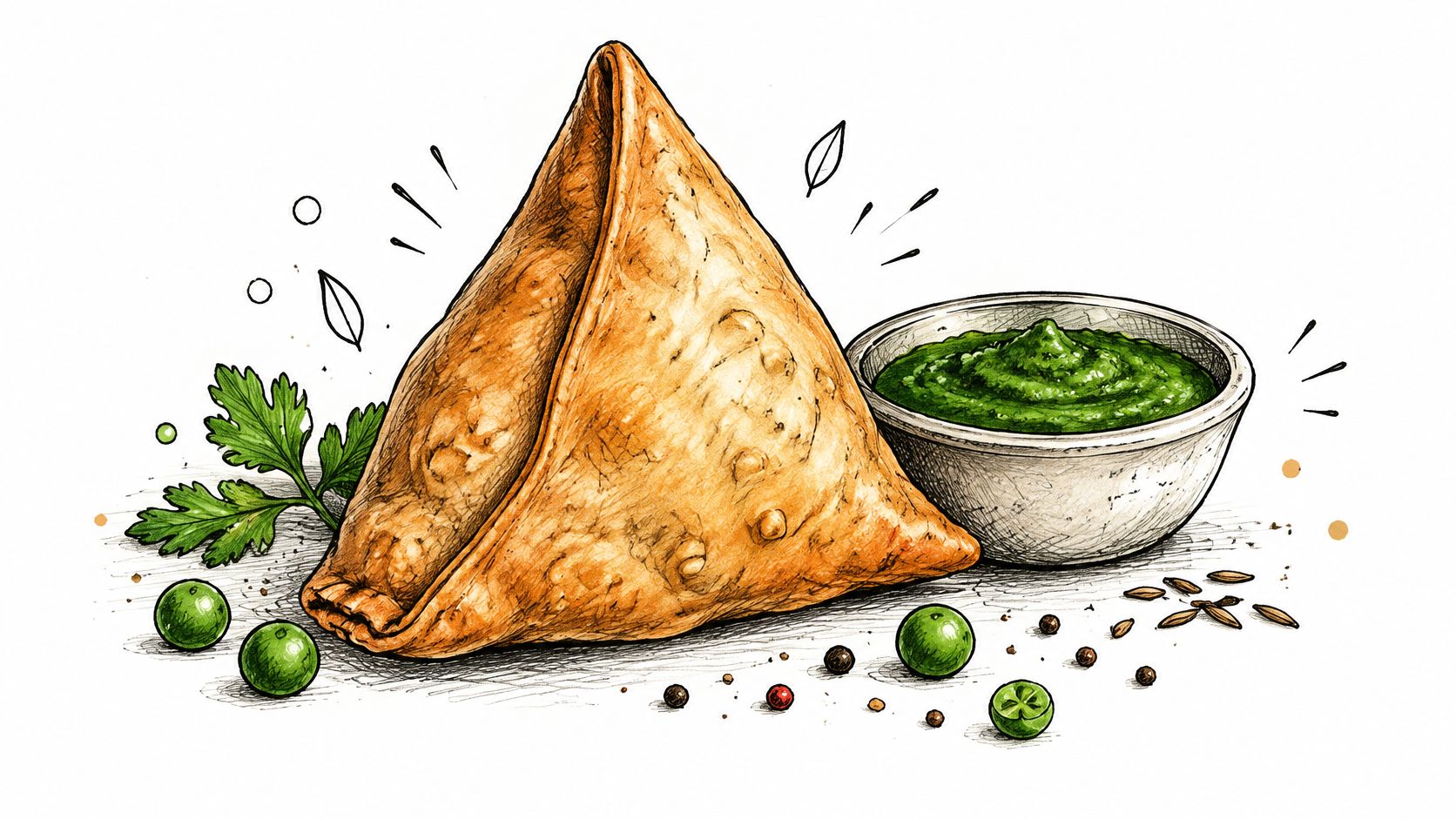
Count and size both matter with samosas. A small party snack and a large takeaway samosa shouldn't automatically receive the same per-piece entry.
The Indian Nutrient Databank publication reports approximately 443 kcal per 100 g for vegetable samosa, compared with 57 kcal per 100 g for khichdi. That's a comparison by weight, not a universal calorie value for an individual samosa. It illustrates why preparation and water content matter alongside portion size.
If you can weigh your samosa, use an entry that matches the preparation. If you can't, record its size, filling, and whether it was fried or baked.
Don't let the snack extras disappear
At a takeaway counter, you might eat the samosa while waiting for dinner. It still belongs in the log, along with chutney and any drink.
- Fried or baked: Select the preparation you ate.
- Sweet chutney: Record it separately rather than assuming it's included.
- Shared snacks: Log your share, not the whole order or an arbitrary default.
Baking or air-frying a homemade version gives you control over added oil, but it doesn't make the pastry and filling disappear from the recipe. Taste and texture will differ too.
If the fried version is what you want, have that version and log it accurately. Substituting something less satisfying, then eating the samosa afterward, doesn't simplify dinner.
8. Masala Dosa
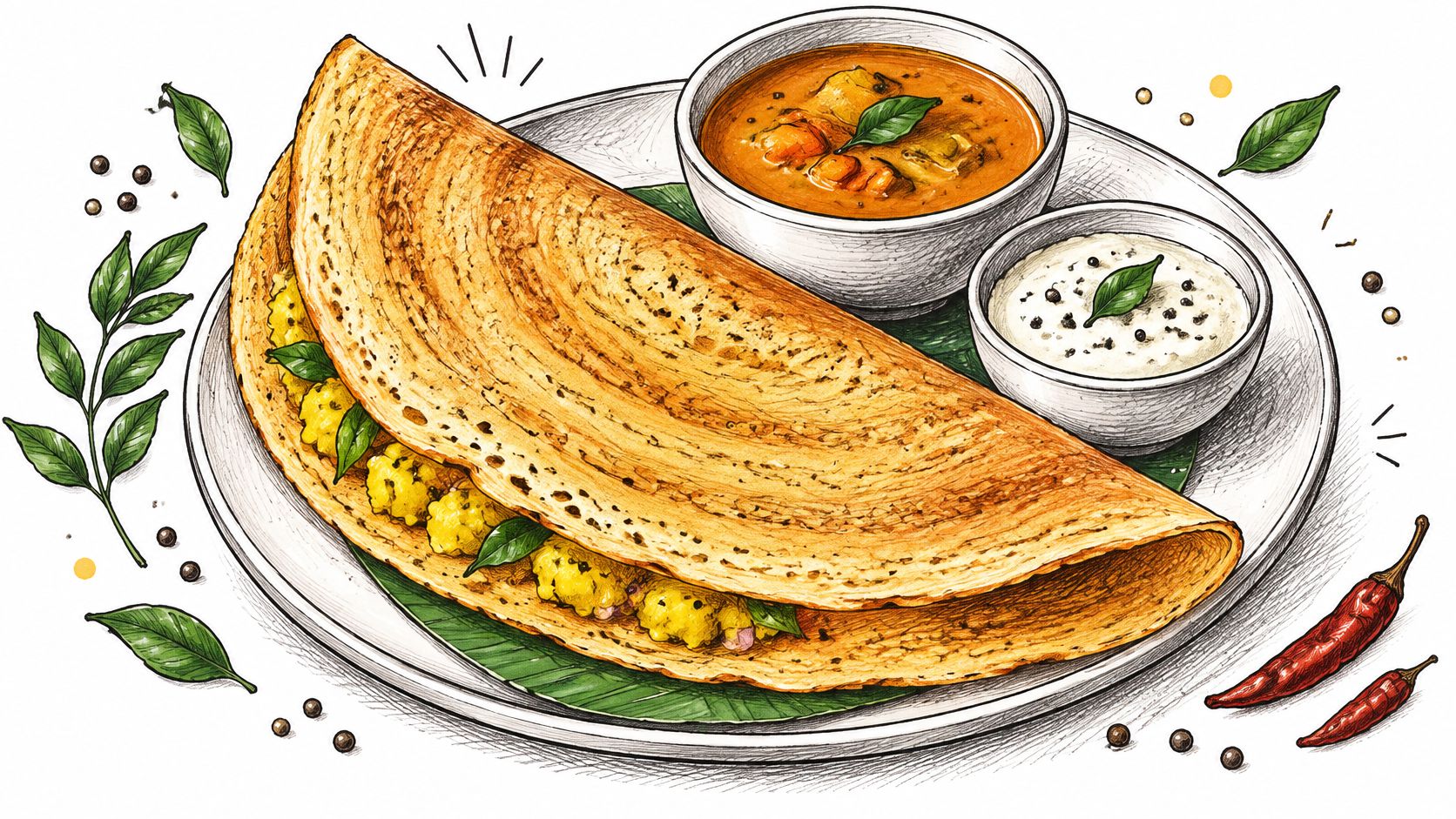
When a masala dosa arrives overhanging the plate, its footprint can distract from the questions that matter. How much filling is inside, what fat was used on the griddle, and what are you eating alongside it?
A photo of the crisp outside won't answer everything. Open the dosa enough to show the filling if you're documenting the meal, and include the sambar and chutney bowls.
The National Nutrition and Wellness Association's calorie guidance emphasizes the importance of portion size, preparation, and added fats when interpreting food calorie values. Those are more useful variables than assuming every masala dosa matches the same serving.
Make the full breakfast visible
At a café, asking for less oil is a practical request, not a guarantee of a particular calorie result. Log the preparation you received as accurately as you can.
- Dosa: Note size and whether butter or ghee was added.
- Potato filling: Include it rather than choosing a plain-dosa entry.
- Sambar and chutney: Record what you consume, including refills.
At home, measure the batter, filling, and cooking fat used in your recipe. A saved homemade entry becomes useful when you repeat the preparation consistently.
The trade-off isn't a choice between dosa and no dosa. You might prefer the usual dosa with a smaller chutney portion, or a smaller dosa with more sambar. Choose the version you'll enjoy and can describe accurately.
9. Idli with Sambar and Chutney
Idli are easier to count than a mixed curry, but counting the cakes isn't the same as logging breakfast. You still need their size and the accompaniments.
At a breakfast counter, the plate might arrive with sambar and coconut chutney, followed by refills. Record those refills rather than assuming the original plate entry covers everything.
Steamed preparation is a useful distinction from fried food. It isn't a reason to ignore serving size or treat the rest of breakfast as nutritionally irrelevant.
Build an entry you can repeat
For homemade idli, a recipe record is more useful than repeatedly selecting unrelated entries. Keep the cake size reasonably consistent, and record sambar and chutney as separate components.
- Idli portion: Match the actual size rather than relying on count alone.
- Sambar: Include the amount eaten, not just what appeared in the first photograph.
- Chutney: Record the type and portion rather than using an unspecified side.
Suppose you usually have idli at home but stop at a café before work. Don't automatically reuse the home breakfast if the cakes and sides are noticeably different.
You can also review whether the breakfast meets your broader nutrition needs. If you want yogurt, an egg, or another protein-containing accompaniment, add it deliberately and log it. The point isn't to keep breakfast as small as possible. It's to understand what you ate and whether it works for you.
10. Tandoori Chicken
Tandoori chicken removes the creamy-gravy question, but it introduces another practical issue: bone-in weight isn't the same as edible chicken weight.
A plate of mixed pieces can be difficult to estimate from piece count alone. Identify the cuts where possible, note whether skin was eaten, and include any butter brushed onto the finished chicken.
For a home dinner, record the chicken and marinade ingredients before cooking. Then account for your share of the edible finished food. Don't apply an edible-meat entry to the weight of bones left on the plate.
Compare like with like
Our guide to chicken thigh calories can help you think through cut and preparation when choosing a matching entry.
At a restaurant, a tandoori platter may come with onions, chutney, bread, or other sides. Photograph and record the full meal rather than treating everything around the chicken as garnish.
Match the log to the chicken you ate, not to the leanest chicken entry you can find.
Choosing a sauce-free main can simplify tracking, but the final dinner still depends on portion and accompaniments. If naan is part of the pleasure, include it. If you'd rather have more chicken and salad, order that instead.
For an oven-cooked home version, measure the marinade and added fat. “Homemade” describes where you cooked it, not its calorie content.
Estimated Calories for 10 Popular Indian Dishes
| Item | Serving Size | Estimated Calories per Serving | Main Calorie Driver |
|---|---|---|---|
| Butter Chicken (Murgh Makhani) | 1 cup (about 250 g), without rice or naan | 480–600 kcal | Butter and cream in the gravy |
| Chicken Tikka Masala | 1 cup (about 250 g), without rice or naan | 430–530 kcal | Cream and oil in the sauce |
| Chicken Biryani | 1 cup (about 200 g) | 350–450 kcal; restaurant plate: 600–900 kcal | Ghee, oil, and portion size |
| Dal Makhani | 1 cup (about 250 g) | 300–420 kcal | Butter and cream |
| Palak Paneer | 1 cup (about 200 g) | 280–380 kcal | Paneer quantity |
| Chana Masala (Chole) | 1 cup (about 200 g) | 240–320 kcal | Oil used in cooking |
| Vegetable Samosa | 1 medium samosa (about 70–80 g) | 230–310 kcal | Oil absorbed by the pastry during frying |
| Masala Dosa | 1 dosa (about 150–180 g) with potato filling | 250–350 kcal | Cooking oil or ghee and potato filling |
| Idli with Sambar and Chutney | 2 idlis, 1 cup sambar, and 2 tablespoons chutney | 200–280 kcal | Coconut chutney portion |
| Tandoori Chicken | 2 medium pieces (about 150–200 g), skin removed or partly removed | 250–350 kcal | Chicken cut and skin; oil brushing |
Turn Your Favorite Curry Into a Smarter Order
You don't have to give up butter chicken, biryani, or dosa to keep useful records. Change a part of the meal you care less about, rather than removing the part you ordered it for. That might mean a smaller rice serving, less added ghee, or saving some bread for another meal.
Start with the distinction between dish calories and meal calories. A curry entry may not include rice. A dosa entry may not include chutney. A tandoori chicken entry may describe edible meat rather than the full bone-in portion.
Use the strongest information you have
For packaged food, use the label and check the serving basis. For home cooking, record the ingredients, cooking fat, finished yield, and your portion. For restaurant food without published nutrition, use a matching estimate and acknowledge what you don't know.
Don't invent hidden oil quantities to make the record look precise. A useful entry can say restaurant-style, creamy sauce, large serving, or some gravy left behind. Those details make later adjustments more meaningful than an unexplained number.
- Keep serving references consistent: Your usual bowl or ladle helps only if you use it consistently.
- Record additions: Butter brushed onto bread, extra chutney, and shared starters still count.
- Adjust for what remains: Food left in the container wasn't part of the meal you ate.
Calories also aren't a complete assessment of a meal. Look at whether your plate includes the protein foods, vegetables, and other components you want. Don't remove those automatically just because reducing them makes the total smaller.
Make photo logging a review step
In our Calorie Genie app, you can photograph the plate to estimate calories and macros, then tap ingredients to adjust their portions before saving. Use that review to correct the rice amount, identify a creamy preparation, or account for bread the photo didn't capture clearly. The result remains an estimate, especially when a restaurant's recipe is unknown.
You can download the app free on iOS and Android, while AI scanning and tracking features require Premium. All calorie estimates are a helpful guide, not medical advice or a substitute for personalized dietary care.
For your next Indian meal, serve the food, capture the full plate, and check the accompaniments before saving the entry. You don't need to redesign dinner. You need a record that resembles what you actually ate.
Calorie Genie AI offers photo-based calorie and macro estimates with editable ingredients and portions, useful for mixed plates of curry, rice, bread, and sides. Visit Calorie Genie AI to explore the app, then review your next Indian meal's portions and preparation before logging it.